Property Types in Malta: A Strategic Overview of Residential and Commercial Real Estate
27th July 2026
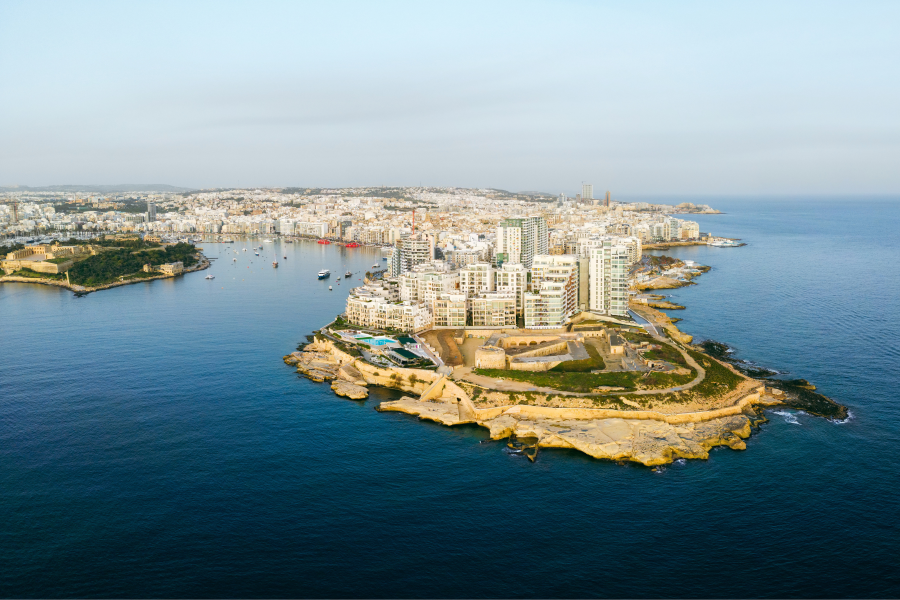
Malta’s property market is defined by a structured hierarchy of residential and commercial asset classes shaped by location, regulation, and international demand. From historic townhouses to contemporary seafront developments, each property type occupies a distinct position within the market, influencing both pricing and investment profile.
Buyers entering the Malta real estate market are not simply choosing a property type. They are selecting a position within a broader investment landscape shaped by rental demand, capital growth potential, and regional desirability. As a result, understanding property types in Malta requires a combined view of structure, price, and location.
Apartments in Malta
Apartments represent the most common property type in Malta, forming the core of the residential market. Their breadth of supply, combined with accessibility across multiple price points, positions them as a central pillar of the property market. Supported by sustained demand from both local buyers and international investors, apartments remain the most liquid and consistently traded asset class, offering a balance of versatility, rental performance, and long-term market relevance.
Standard Apartments in Malta
Standard apartments are widely available across Malta and Gozo, offering practical living solutions in both urban and suburban locations. These properties typically form part of multi-unit residential blocks and range from compact one-bedroom units to larger family-sized homes that may consist of two, three or even four-bedroom units.
They are particularly attractive to first-time buyers and buy-to-let investors due to their relatively low entry price and consistent demand. Areas such as Sliema, St Julian’s, and Gzira remain key hotspots for apartment investments, driven by proximity to business districts and coastal amenities.
Depending on the location, size and the level of finishes, a well-appointed standard apartment in Malta can range from €450,000 - €700,000.
Luxury Apartments in Malta
Luxury apartments cater to high-net-worth individuals seeking premium finishes, expansive layouts, and prime positioning. While SDAs account for a significant share of this segment, luxury apartments are also found in standalone developments and boutique residential projects across coastal and urban locations.
Popular areas for luxury apartments include Sliema and St Julian’s, which remain central to Malta’s premium property market, where large-scale developments continue to define the upper tier of apartment living. Emerging demand is also evident in areas such as Kalkara and Mellieha, where new developments are introducing high-specification units at comparatively competitive price points.
Luxury apartments, particularly those found in upmarket developments, can start anywhere from €600,000 – €1,800,000. With some properties exceeding this number depending on location, size, finishes and amenities.
Penthouses in Malta
Penthouses sit at the top of the apartment market, defined by large terraces and elevated views. Their limited supply and elevated positioning contribute to strong capital appreciation, particularly within prime residential developments and Special Designated Areas such as Tigne Point, Mercury Towers, and Portomaso, where exclusivity and lifestyle value drive sustained demand.
Penthouse properties in Malta vary in size, finish, and overall specification, with pricing influenced by internal layout, terrace proportions, and the quality of the surrounding development. Pricing typically ranges from €700,000 - €3,000,000, although premium units can exceed this range significantly depending on location, scale, and access to high-end amenities.
Maisonettes in Malta
Maisonettes offer a hybrid between apartment living and standalone homes, defined by their private entrances and increased sense of independence. They are a well-established segment of the Malta property market, appealing to buyers who want more privacy than a standard apartment without the cost of a full house.
Ground floor units provide direct street-level access and often include outdoor spaces such as internal yards or small gardens, making them particularly suitable for families and older residents where accessibility and practicality are key considerations. First floor maisonettes, typically accessed via a private staircase, offer more elevated living spaces with defined internal layouts and greater separation between living areas.
Maisonettes are generally priced above standard apartments due to their independent access and increased privacy. Ground floor units with outdoor space in high-demand areas can command higher values, with prices ranging from approximately €620,000 to €2,000,000 depending on location and specification.
Terraced Houses in Malta
Terraced houses are typically post-war or modern multi-level residential properties that form part of a continuous row of homes, commonly found in established suburban and village neighbourhoods. Unlike maisonettes, they function as full standalone houses, often spanning two to three floors and offering larger internal living areas, separate kitchens, and dedicated sleeping quarters.
A defining feature of terraced houses is their practical layout, which often includes a street-level garage, internal yard, and a roof level that can be utilised for additional living space or entertaining. In many cases, properties also offer the potential for vertical expansion, making them particularly attractive to buyers seeking long-term adaptability and value creation.
They are well suited to families and long-term residents due to their scale, functionality, and relative privacy, when compared to apartment living. Buyers can expect costs from €750,000 to €1,500,000 or higher depending on location, condition, and overall size, with renovated or extended properties in prime residential areas achieving stronger valuations.
Traditional Maltese Houses
Traditional Maltese houses represent one of the most distinctive and supply-constrained segments of the Malta property market. Defined by heritage architecture, these properties occupy a rare position within the residential landscape, shaped by preservation of original structures in historic urban and village cores. Their appeal lies in a combination of craftsmanship, authenticity, and historical significance, which has become increasingly difficult to replicate within modern developments.
Characterised by limestone construction, internal courtyards, timber balconies, and high ceilings, these properties differ significantly from modern developments. As demand continues to shift toward unique and experience-driven living environments, traditional houses have become increasingly attractive to both lifestyle buyers and investors seeking differentiation within the market.
Townhouses in Malta
Townhouses are typically located in village centres and Urban Conservation Areas (UCAs), forming part of Malta’s historic streetscapes. These properties often span multiple levels and retain original features such as patterned tiles, traditional staircases, and enclosed wooden balconies.
From a market perspective, townhouses present a dual opportunity. Unconverted properties offer entry at a lower price point with clear potential for value creation through renovation, while fully restored units command premium pricing due to their turnkey appeal. Pricing typically ranges from €650,000 in unconverted condition, extending to €3,000,000 or more for fully restored properties, with exceptional examples in Valletta and similar heritage cores exceeding this range
Houses of Character
Houses of character represent a refined segment of Malta’s traditional housing market, typically restored to preserve original architectural elements while integrating modern living standards. These properties are defined by their individuality, with each home reflecting a unique combination of structure, layout, and restoration approach that cannot be replicated in modern developments.
Many begin as structurally complex restoration projects where original features such as stone arches, courtyards, and timber beams are preserved within redesigned interiors. This combination of heritage and modern specification places them firmly within the upper tier of the residential market.
Their pricing reflects both scarcity and complexity. Unlike standard developments, houses of character are limited by strict preservation frameworks and the finite availability of eligible structures within historic cores. This constraint, combined with rising demand for authentic, design-led living environments, positions them firmly within the upper tier of the residential market.
Houses of Character in Malta are generally listed from €650,000 on the lower end of the market, well up to €8,000,000, with premium examples in highly protected areas such as Mdina and select village cores commanding significant premiums due to their historical importance, scale, and level of restoration. Demand remains driven by buyers seeking a combination of authenticity, architectural identity, and modern comfort, making these properties particularly resilient in terms of long-term value retention.
Farmhouses
Farmhouses are predominantly located in Gozo and the more rural parts of Malta, offering a scale, privacy, and sense of separation from urban density that is increasingly rare within the local property market. Unlike other residential property types, they are typically set on larger plots of land, often surrounded by agricultural landscapes, valley views, or open countryside, which significantly enhances their exclusivity.
These properties are defined as much by their setting as by their structure. Many include private driveways, extensive outdoor entertainment areas, pools, and mature gardens, with layouts designed around outdoor living rather than compact internal efficiency. This creates a lifestyle proposition that is fundamentally different from urban apartments or suburban housing.
Their market positioning reflects both scarcity and land value dynamics. Supply is naturally constrained by zoning restrictions, agricultural land classifications, and limited developable rural zones, which makes well-located farmhouses increasingly difficult to replace or replicate. As demand continues to grow for private, low-density living environments, particularly from international buyers and lifestyle-driven investors, farmhouses have become one of the most sought-after niche segments in Malta’s property market.
Expect to enter the market from around €1,200,000 for unconverted properties and upwards of €8,000,000 for fully restored estates with substantial land, high-end finishes, and premium amenities. At the upper end of the market, value is driven less by internal specification alone and more by land size, privacy, views, and overall seclusion.
Palazzos in Malta
Palazzos occupy a distinct and highly prestigious segment of Malta’s property market, representing some of the island’s most historically significant residential buildings. These grand residences are typically found in urban cores and heritage-rich village centres, where they were originally built as homes for nobility, wealthy merchants, and influential families during Malta’s periods under the Knights of St John and later historical eras.
Architecturally, palazzos are defined by scale and craftsmanship. They often feature imposing stone façades, grand internal courtyards, vaulted ceilings, and large interconnected rooms arranged across multiple floors or wings. Many also include original decorative elements such as stone carvings, wrought iron detailing, internal loggias, and sweeping staircases that reflect their historical status and original social function.
Unlike modern villas, palazzos are not designed around contemporary luxury standards but rather around historical grandeur and spatial hierarchy. This creates highly adaptable layouts that can be reconfigured for private residences, boutique hospitality projects, cultural venues, or mixed-use luxury developments, depending on restoration approach and planning constraints. As a result, each palazzo carries a unique architectural identity that cannot be replicated within modern construction.
Their market value is driven by a combination of scarcity, scale, and cultural significance. Supply is extremely limited, with only a finite number of structurally sound palazzos remaining in key historic locations. Unconverted Palazzo’s in Malta typically start from around €1,800,000, while fully restored or architecturally significant examples can extend well beyond €12,000,000 depending on location, condition, and heritage importance.
Prime examples are most commonly found in Mdina, Valletta, and select historic village cores, where preservation regulations and cultural heritage protections maintain architectural integrity. Demand is concentrated among ultra-high net worth buyers, international investors, and heritage-focused developers seeking landmark properties that offer both prestige and long-term capital preservation.
Villas and High-End Residences on Malta
Villas represent the upper tier of Malta’s residential property market, defined by space, privacy, and access to some of the island’s most exclusive residential locations. This segment caters primarily to high-net-worth individuals seeking standalone living environments with generous outdoor areas, privacy, and long-term capital preservation potential.
Within this category, both detached and semidetached villas sit on a shared premium spectrum, differentiated mainly by degree of privacy, plot size, and land ownership. Detached villas offer complete independence, with no shared structures, and typically feature private gardens, swimming pools, and dedicated driveways. Semi-detached villas, while sharing one structural wall with an adjacent property, still provide substantial internal space and private outdoor areas, positioning them within the same high-end bracket but at a comparatively lower entry point.
These properties are concentrated in established upscale residential zones such as Mellieha, Madliena, Santa Maria Estate, and parts of Naxxar and Mosta, where larger plots and elevated positioning remain available. Their value is strongly influenced by land scarcity, development quality, and location exclusivity, with demand consistently driven by both local affluent buyers and international investors seeking long-term residential assets.
Pricing across the villa segment generally ranges from approximately €1,200,000 at entry level for semi-detached or smaller detached units, extending to €15,000,000 and beyond for large-scale, architecturally significant, or highly positioned luxury estates in prime coastal or hillside locations.
These properties are often held as long-term family residences, legacy assets, or high-end rental investments targeting executive tenants, reflecting their dual role as both lifestyle and capital-driven acquisitions.
Commercial Property in Malta
Commercial real estate in Malta plays a key role in the island’s economy, closely linked to sectors such as financial services, iGaming, tourism, and professional corporate services. Unlike residential property, value in this segment is primarily driven by income generation, lease stability, and location quality rather than lifestyle considerations.
The market is broadly structured into three main quality grades. Grade A refers to modern, high-specification buildings in prime business districts or Special Designated Areas, offering strong energy efficiency, professional management, and flexible layouts. Grade B includes well-located but older or partially refurbished stock, while Grade C represents secondary or outdated properties where value is driven more by repositioning potential.
Office Space
Office space is the most structured and institutional segment of Malta’s commercial property market, concentrated in established business hubs such as Sliema, St Julian’s, Ta’ Xbiex, and Mriehel. Demand is driven by international companies, financial services firms, and growth sectors such as iGaming and technology, where proximity to talent and infrastructure is essential.
Modern office developments increasingly prioritise flexible layouts, energy efficiency, and shared amenities to accommodate hybrid working models. Grade A offices in prime business districts achieve between €180 and €320 per square metre per year. Premium Grade A stock located within Special Designated Areas such as Tigne Point or Portomaso can reach €250 to €450+ per square metre per year. Grade B offices generally range from €150 to €230 per square metre per year, while Grade C stock sits between €120 and €180 per square metre per year depending on condition and location.
Other Commercial Property
Other commercial property includes retail and hospitality assets, both of which are strongly influenced by tourism flows, visibility, and foot traffic.
Retail properties in prime locations such as Valletta, Sliema, and St Julian’s command the highest values due to consistent pedestrian demand and tourism exposure. Prime retail frontage ranges from €1,200 to €6,000 per square metre per year equivalent in high visibility positions, while secondary retail units generally range from €800 to €3,000 per square metre per year depending on exposure and location quality.
Hospitality and tourism-related assets, including hotels, guesthouses, and serviced accommodation, are generally valued based on income performance rather than strict square metre comparisons. However, prime assets in coastal and central tourist zones continue to reflect strong underlying land value and sustained demand, particularly within Malta’s year-round tourism market.
Specialised Property Types
Beyond standard residential and commercial categories, Malta also offers a set of specialised property types that sit within niche but highly active segments of the market. These properties are often defined less by conventional classification and more by timing, location scarcity, architectural transformation, or experiential value. As a result, they tend to attract targeted buyer profiles and frequently outperform broader market averages when positioned correctly.
New Developments and Off Plan Properties in Malta
Off-plan properties are purchased before construction is completed, typically at an earlier stage of the development cycle. This allows buyers to secure units at a lower entry price compared to completed stock, with the expectation of capital appreciation as the project progresses and market value adjusts upon completion.
In Malta, new developments are a significant driver of modern housing supply, particularly in urban and coastal expansion zones. These developments generally feature contemporary architectural design, energy-efficient systems, and integrated lifestyle amenities such as gyms, pools, underground parking, and communal shared spaces. The focus is increasingly on lifestyle functionality, with layouts designed for open-plan living and rental efficiency.
From an investment perspective, off-plan purchases are often used as a capital growth strategy or rental positioning tool. Buyers typically benefit from staged payment structures, while developers rely on early sales to fund construction phases.
In Malta, off-plan properties are generally priced at 5% to 15% lower than completed units, depending on the development stage, location, and developer profile. Entry-level apartments in new developments typically start from around €350,000 to €800,000 in early sales phases, while higher specification units in prime coastal or Special Designated Areas can range from approximately €600,000 to €6,000,000 or more upon completion. The key value driver is the price differential between early acquisition and post-completion market pricing, particularly in high-demand locations where supply remains constrained.
Luxury Seafront Properties in Malta
Luxury seafront properties represent one of the most desirable segments of Malta’s real estate market, defined by direct or immediate proximity to the coastline, uninterrupted sea views, and structurally limited supply. Concentrated in prime coastal areas where development potential is highly restricted, these properties naturally command a strong exclusivity premium.
From a lifestyle perspective, they offer premium living defined by natural light, open views, and direct access to waterfront promenades. From an investment perspective, they consistently outperform inland equivalents due to scarcity and sustained international demand.
Seafront properties are widely utilised within the high-end rental market, particularly for executive short stays and luxury tourism accommodation, while also attracting long-term expatriates seeking premium relocation options. Pricing is primarily influenced by view quality, orientation, and floor level, with frontline units commanding significant premiums over secondary coastal positions.
Expect pricing for seafront properties to start from approximately €850,000 to €2,000,000 for entry-level seafront apartments in less central coastal areas, while prime frontline properties in locations such as Sliema, St Julian’s, and Tigne Point generally range from €2,000,000 to €5,000,000. Ultra prime penthouses and signature residences in Special Designated Areas can well exceed €4,000,000 + depending on terrace size, specifications, and unobstructed views.
Urban Conservation Areas (UCAs) and Heritage Properties in Malta
Urban Conservation Areas (UCAs) in Malta are designated planning zones that protect historic streetscapes and traditional architecture within established towns and villages. They impose stricter planning controls, particularly on demolition and external alterations, limiting large-scale redevelopment.
UCAs are not a property type, but a planning and value framework that directly influences pricing and supply. By restricting development, they preserve architectural character and reinforce long-term scarcity in traditional housing stock.
Properties within UCAs typically include palazzos, townhouses, houses of character, and older mixed-use buildings within historic cores. These properties generally range between €600,000 and €1,000,000 in secondary village locations, while fully restored or larger homes in prime areas can reach €1,000,000 to €7,000,000 or more. Exceptional properties in historic centres such as Valletta or Mdina can exceed these levels due to extreme scarcity and heritage value.
Special Designated Areas (SDA) in Malta
Special Designated Areas (SDAs) in Malta are master planned residential and mixed-use developments that allow both local and foreign buyers to purchase property with fewer ownership restrictions, including the ability for non-residents to acquire multiple units without an Acquisition of Immovable Property (AIP) permit.
These developments are located in prime urban and coastal zones and are designed as integrated communities combining residential units with retail, leisure facilities, and managed shared spaces, focused on high-specification lifestyle living. SDAs include a mix of property types such as apartments, duplexes, penthouses, and luxury seafront residences, with some developments also incorporating commercial components.
Special Designated Areas typically vary from approximately €600,000 to €800,000 for entry-level units, €800,000 to €1,500,000 for mid-range apartments, and €1,200,000 to €3,000,000 for larger units and penthouses. Ultra-prime residences in developments such as Tigne Point, Portomaso, and Mercury Towers can range from €3,000,000 to € 6,000,000+, depending on specifications and views. They remain highly attractive to international buyers and investors due to strong rental demand, liquidity, and ownership flexibility.
Malta’s property market offers a wide range of residential and commercial options, each defined by location, architecture, and investment profile. Apartments form the core of the residential market, supported by strong rental demand and accessibility. Maisonettes provide a balance between independence and practicality, while traditional houses preserve Malta’s architectural heritage through townhouses, houses of character, and rural farmhouses.
At the higher end of the market, villas and palazzos represent premium and ultra-premium segments defined by space, privacy, and exclusivity. Commercial property, including offices, retail, and hospitality assets, plays a key role in supporting Malta’s economic sectors and international business presence. Whilst specialised segments such as Special Designated Areas, seafront properties, and off-plan developments add further depth, offering structured entry points for investors and lifestyle-driven buyers.
For tailored guidance on Malta’s property market and access to exclusive residential and commercial opportunities, contact Malta Sotheby’s International Realty today on +356 2010 8077, visit www.maltasothebysrealty.com, or meet the team in person at the Portomaso Marina or Tigné Point Pjazza offices.