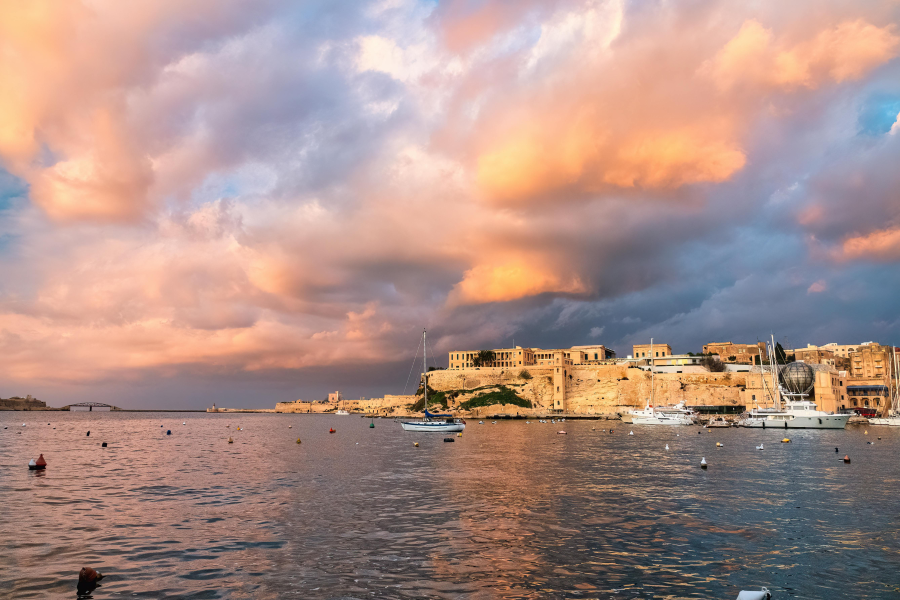
Moving to Malta from Canada: Your Guide to Relocation
Malta Relocation & Residency News
16th September 2026

Relocating from Canada to Malta has become increasingly attractive for Canadians seeking a warmer climate, English-speaking environment, and access to the wider Schengen Area. The appeal is often rooted in lifestyle contrast, moving away from long winters and high property prices in cities such as Toronto and Vancouver. For many Canadians, Malta's compact size and shorter travel times provide a welcome contrast to the large distances often associated with daily life in Canada.
Malta offers a unique position within the European Union, combining English as an official language, a strong expat community, and year-round outdoor living. The island's Mediterranean lifestyle, centred around coastal living, outdoor activities, and easy access to Europe, appeals to many Canadians seeking a change of pace. Malta's reputation as a safe and stable country is another factor attracting individuals and families looking to relocate abroad. Popular motivations for Canadians include remote work relocation, retirement planning, career opportunities, investment migration, and lifestyle change.
It is important to clarify that Canadians are treated as third-country nationals in Malta because Canada is outside the EU, EEA, and Switzerland. This affects work permits, residence permits, property acquisition, and long-term stay requirements. Therefore, Canadian-specific guidance is essential, particularly when dealing with residency rules, taxation, healthcare requirements, property purchases, pet relocation procedures, and driving licence regulations.
Quick Facts for Canadians Moving to Malta
|
Topic |
Key Point for Canadians |
|
Short stays |
Canadians can visit Malta visa-free for up to 90 days in any 180-day Schengen period. |
|
Long stays |
A residence permit is required beyond the short stay limit. |
|
Work |
A Maltese work permit or Single Permit is required before local employment. |
|
Remote work |
The Malta Nomad Residence Permit may suit non-Maltese employed remote workers. |
|
Tax |
Canadian tax obligations depend on Canadian tax residency status, not citizenship. |
|
Healthcare |
Private health insurance is usually required during initial residence stages. |
|
Property |
Non-EU buyers may require an Acquisition of Immovable Property permit unless exempt. |
|
Pets |
Pets require an EU-compliant microchip, rabies vaccination, and Malta pre-notification. |
Preparing for Your Move to Malta from Canada
A successful relocation is rarely determined by the final move itself. It is shaped by the preparation that happens months in advance, especially in areas such as residence permit selection, financial structuring, and compliance with both Canadian exit requirements and Maltese entry conditions.
Relocation Timeline for Canadians
A structured relocation timeline is essential when moving from Canada to Malta, particularly because Canadians are classified as third-country nationals under Maltese and European immigration frameworks. This affects not only visa eligibility, but also tax residency planning, property acquisition strategy, healthcare access, and long-term settlement decisions.
6–12 Months Before Moving to Malta from Canada
The earliest stage of relocation planning is focused on clarity, structure, and strategic decision-making. Canadians should avoid rushing this phase, as decisions made here directly influence immigration pathways, taxation outcomes, and overall cost of living abroad.
At this stage, Canadians should determine whether the move to Malta is temporary or permanent. This distinction is important because it affects everything from tax residency treatment in Canada to eligibility for Maltese residence programmes and property ownership options. A temporary relocation may prioritise flexibility, while a permanent move may require deeper investment in housing and long-term legal status.
Should the move be permanent, then choosing the correct residence route is essential. Options may include employment-based permits, the Malta Nomad Residence Permit, family reunification pathways, or investment-linked residency programmes. Each route has different eligibility criteria, processing times, and obligations, making early selection critical.
Professional tax advice should be sought in both Canada and Malta. Canadians must evaluate potential departure tax exposure, the impact of severing residential ties with Canada, and how future income will be treated under the Canada-Malta tax treaty. This stage often determines whether assets should be reorganised before departure or retained in Canada.
In addition, property planning should be prioritised in the early stages of your relocation journey. Canadians should review both rental and purchase options in key areas such as Sliema, St Julian’s, Valletta, and Gozo. These locations vary significantly in price, lifestyle, and accessibility. At the same time, families should investigate school availability, admission deadlines, and waiting lists for both local and international education options, as placement can be competitive in certain districts.
If pets are part of the relocation, strict EU animal import regulations need to be followed and planning for this should not be delayed. This includes vaccination timing, microchipping requirements, and travel logistics that may require several months of coordination.
3–6 Months Before Moving to Malta from Canada
At this stage of the planning process, your focus should shift from strategy to documentation, applications, and logistical preparation as the relocation process becomes more structured and time-sensitive. Canadians should begin gathering essential documents such as:
- proof of income,
- employment contracts,
- pension statements,
- bank records, and
- savings verification.
These documents are often required for residence permit applications, financial due diligence, and accommodation agreements. In addition, those relocating should check the validity of their passport and ensure compliance with Schengen entry rules. Any passport renewals should be completed before you travel to avoid delays in residence processing or border entry complications.
Residence permit preparation should begin during this period too. Canadians applying for routes such as the Malta Permanent Residence Permit (MPRP), Malta Nomad Residence Permit or employment-based Single Permit should start compiling application requirements, securing employer documentation where relevant, and preparing proof of accommodation and insurance.
At this time, shipping arrangements from Canada to Malta should be initiated. This includes obtaining quotes from international relocation companies, comparing sea freight and air freight options, and deciding which belongings are worth transporting versus replacing locally or deciding which furniture items are not needed at all in the case of renting, as the majority of rental properties in Malta are available fully furnished.
At the same time, Canadians should review Canadian tax departure implications in more detail. This includes assessing whether they will be considered non-residents for tax purposes, understanding deemed disposition rules, and preparing for final tax filings if they are permanently leaving Canada.
1–3 Months Before Moving to Malta from Canada
The final months before relocating should be focused on execution, confirmation, and operational readiness. At this stage, most strategic decisions should already be confirmed, and loose ends such as health insurance, accommodation confirmation, shipping inventory and pet relocation, where applicable, are finalised.
- Ensure that health insurance is arranged to meet Maltese residence requirements. Canadians should ensure coverage meets minimum thresholds and includes international validity where necessary, particularly during the initial settlement period before full access to local healthcare systems is established.
- Accommodation should be confirmed, whether through long term rental agreements or short-term transitional housing. This is also the period when deposits are paid, and contracts are finalised.
- A detailed customs inventory should be prepared for shipped goods. This includes item descriptions, valuations, and shipping documentation required for clearance in Malta. Accuracy is important to avoid delays or unexpected duties.
- Pet relocation documentation must be completed if applicable. This includes final veterinary certificates, travel approvals, and compliance with EU entry requirements, which are time-sensitive and strictly enforced.
Finally, Canadians should notify relevant institutions in Canada, including banks, insurance providers, provincial healthcare authorities, and tax advisors. This ensures proper account status updates, prevents administrative issues, and supports accurate tax residency classification after departure.
Essential Documents Canadians Should Prepare
- Valid Canadian passport
- Birth certificates
- Marriage or divorce certificates where applicable
- Police clearance certificates if required
- Proof of income or employment contracts
- Pension statements where applicable
- Proof of remote employment, self-employment income, or client contracts where applicable
- Bank statements and financial proof of funds
- Health insurance documentation
- Rental agreement or property purchase documentation
- Academic records for dependants
- Pet vaccination and export certificates where relevant
Confirm whether Canadian documents require apostille certification, authentication, legalisation, certified translation, or notarisation depending on the specific Maltese authority, residence programme, or application process involved
Entry Rules: Can Canadians Move to Malta Without a Visa
One of the most common questions Canadians ask when planning a move to Malta is whether a visa is required before arrival. While Canadian citizens benefit from visa-free access for short visits, the rules for long-term residence, employment, study, and relocation are significantly different.
Understanding the distinction between short-stay travel and long-term residency is essential, particularly because Malta forms part of the wider Schengen Area. Canadians planning to relocate should familiarise themselves with entry requirements, passport rules, future travel authorisation systems, and the circumstances under which a residence permit becomes necessary.
Short Stays in Malta for Canadian Citizens
Canadians can enter Malta visa-free for tourism or short business visits for up to 90 days within any 180-day period. This rule applies across the entire Schengen Area, meaning time spent in countries such as Italy, France, Spain, Greece, Germany, and other Schengen member states is included in the same allowance.
Passport Validity and Border Requirements
Canadian travellers should ensure their passport is valid for at least three months beyond the intended departure from the Schengen Area. Border officials may request proof of accommodation, return travel, sufficient financial means, and information regarding the purpose of their stay.
ETIAS and Future Travel Rules
The European Travel Information and Authorisation System (ETIAS) is a pre-travel authorisation that will be required for visa-exempt travellers entering participating European countries, including Malta. It is not a visa, but an electronic travel authorisation that must be obtained before departure. ETIAS is expected to become mandatory in the last quarter of 2026. Canadians planning future travel should check the official ETIAS website before departure to confirm current requirements, implementation timelines, and application procedures.
When Canadians Need a Residence Permit in Malta
Visa-free entry does not allow long-term residence or employment in Malta. Canadians intending to remain in Malta beyond the short-stay allowance must apply through an appropriate residence route. Common options include employment-based permits, study permits, family reunification, the Malta Nomad Residence Permit, the Global Residence Programme, and the Malta Permanent Residence Programme, depending on the applicant's circumstances and objectives.
Malta Residency Options for Canadians
Canadians planning to move to Malta for longer than the visa-free short-stay period must obtain an appropriate residence authorisation. Unlike European Union citizens, Canadians are considered third-country nationals, meaning there is no automatic right to live, work, or study in Malta without the correct permit or residency status.
The most suitable residence route will depend on the purpose of the move. Some Canadians relocate after securing employment with a Maltese company, while others move as remote workers, retirees, students, investors, or family members joining relatives already living in Malta. Each pathway has its own eligibility criteria, documentation requirements, financial thresholds, processing timelines, and ongoing obligations.
Choosing the correct route from the outset can help avoid delays, reduce administrative complications, and provide greater certainty when arranging accommodation, employment, schooling, healthcare, and long-term financial planning.
Residence Routes at a Glance for Canadians Moving to Malta
|
Route |
Best For |
Key Notes |
|
Single Permit |
Canadians with a Maltese job offer |
Combines work and residence authorisation |
|
Key Employee Initiative |
Senior or specialised employees |
Faster route for qualifying roles and salary levels |
|
Specialist Employee Initiative |
Skilled workers with specialist qualifications |
Designed for eligible skilled third-country nationals |
|
Nomad Residence Permit |
Remote workers |
For people working for employers, businesses, or clients outside Malta |
|
Global Residence Programme (GRP) |
Non-EU individuals seeking special tax status |
Special tax residence framework |
|
Malta Permanent Residence Programme (MPRP) |
Long-term residence by investment |
Requires property, contribution, donation, fees, and due diligence |
|
Student Residence |
Canadian students |
Study-based permit |
|
Family Reunification |
Family members of legal residents |
Requirements vary depending on sponsor status |
Single Permit for Canadians Working in Malta
Canadians who wish to work for a Maltese employer will generally require a Single Permit. This is a combined residence and work authorisation designed for third-country nationals who intend to live and work in Malta for more than six months. The Single Permit is usually linked to a specific employer and job role. As a result, permit holders cannot freely change employers without obtaining the appropriate authorisation. Both employers and applicants should be aware that submitting an application does not grant permission to begin working before approval is issued. Jobsplus notes that the application process may take up to four months and can involve labour market considerations and other eligibility checks before a decision is made.
Key Employee Initiative and Specialist Employee Initiative
For higher-skilled Canadians, Malta offers specialised employment routes that may provide faster or more streamlined processing. The Key Employee Initiative is designed for eligible managerial or highly technical roles and currently applies to positions with a gross annual salary of at least €35,000. It is intended to facilitate the recruitment of senior professionals whose skills are required within the Maltese economy.
The Specialist Employee Initiative is aimed at eligible skilled workers with specialist qualifications or experience and currently applies to qualifying roles with a gross annual salary of at least €25,000. Applicants are generally required to demonstrate relevant professional experience, qualifications, or technical expertise. It is, however, important to verify the required salary thresholds, eligibility criteria, and processing rules set out by Jobsplus, as Malta's labour migration policies continue to evolve.
Malta Nomad Residence Permit for Canadians
The Malta Nomad Residence Permit is highly relevant for Canadian remote workers seeking to live in Europe while maintaining employment outside Malta. It is designed for individuals employed by foreign companies, freelancers, or business owners with international clients. Applicants must demonstrate a minimum annual income of approximately €42,000, hold valid health insurance, and secure accommodation in Malta.
The programme is not intended for Canadians employed by Maltese companies, as local employment generally requires a different residence and work authorisation route. The official programme is specifically designed for third-country nationals who can carry out their work remotely while legally residing in Malta. This route is particularly suitable for professionals in technology, consulting, digital services, and entrepreneurship. However, time zone differences between Malta and Canada can impact communication schedules, especially for Pacific-based roles.
Malta Global Residence Programme (GRP) for Canadians
The Global Residence Programme is a tax residence framework aimed at non-EU individuals seeking a favourable tax environment. The programme is available to qualifying individuals who are not citizens of an EU, EEA, or Swiss member state. It is often used by financially independent Canadians and retirees.
Foreign-source income remitted to Malta may be subject to a flat 15% tax rate under qualifying conditions, with minimum annual tax obligations applying. Tax treatment depends on residency and domicile status, requiring professional tax assessment. Further information on the Global Residence Permit can be found here.
Malta Permanent Residence Programme (MPRP) for Canadians
The Malta Permanent Residence Programme is a long-term residency option for non-EU nationals seeking stability in Malta. It involves property commitments, financial contributions, due diligence, and government fees. Applicants may include family members, and the programme is often used by high-net-worth individuals and retirees seeking permanent EU residence rights.
Applications must be submitted through a Licensed Agent authorised to administer the programme. The MPRP provides permanent residence rights but does not grant Maltese citizenship. The programme includes four principal components: a qualifying property commitment through either rental or purchase, a government contribution, a donation to an approved non-governmental organisation, and administrative fees. Applicants are also subject to a rigorous multi-tier due diligence process. More information on the Malta Permanent Residence Programme can be viewed here.
Student Residence for Canadians
Canadian students accepted into recognised Maltese educational institutions may apply for a student residence permit for the duration of their studies. Applicants are typically required to demonstrate enrolment, adequate financial resources, health insurance coverage, and suitable accommodation arrangements. Malta offers a range of higher education opportunities, including programmes provided by the University of Malta and various international educational institutions. Students may also be permitted to work part-time, subject to the applicable residence conditions and employment regulations.
Family Reunification
Canadians may be eligible for family reunification if they are joining a spouse, partner, parent, or other qualifying family member who is legally resident in Malta. Eligibility requirements vary depending on the status of the sponsor and the relationship involved. Applicants are generally required to provide proof of the family relationship, evidence of suitable accommodation, proof that financial requirements can be met, and health insurance where applicable. Processing timelines can vary depending on the residence status of the sponsor and the complexity of the application.
Maltese Citizenship for Canadians - Avoid Misleading Claims
Moving to Malta as a Canadian does not automatically lead to Maltese citizenship. Residence permits, tax residence programmes, and permanent residence schemes are separate from citizenship pathways. Individuals interested in acquiring Maltese citizenship should seek advice on the specific routes available, such as naturalisation, family-based eligibility, or merit-based provisions, rather than relying on outdated references to "citizenship by investment" programmes which have officially been terminated.
Finding a Home in Malta for Canadians
Securing suitable accommodation is one of the most important aspects of relocating to Malta from Canada. Housing decisions can influence everything from commute times and lifestyle preferences to residency applications, school access, and long-term financial planning. While Malta is geographically small compared to Canada, property prices, rental rates, neighbourhood character, and housing types can vary considerably between different towns and regions.
Canadians moving to Malta should take time to understand the local property market before making any long-term commitments. Factors such as proximity to employment centres, access to schools, public transport links, parking availability, and lifestyle preferences can all play a significant role in determining the most suitable location. Those unfamiliar with Malta often discover that areas only a few kilometres apart can offer very different living experiences.
Whether the goal is to rent an apartment upon arrival, purchase a family home, invest in property, or secure accommodation as part of a residency programme, understanding the Maltese housing market can help Canadians make informed decisions and avoid costly mistakes during the relocation process.
Renting First After Arriving from Canada
Most Canadians are advised to rent initially before purchasing property. Rental accommodation is widely available, particularly in coastal and urban areas. Popular rental locations include Sliema, St Julian's, Valletta, the Three Cities, Naxxar, Mellieħa, Marsaskala, St Paul's Bay, and Gozo. Renting first allows newcomers to experience different localities before committing to a property purchase and helps ensure the chosen area aligns with their lifestyle, commuting needs, and long-term plans.
Canadians should also understand the difference between short-let and long-let accommodation. Short-let properties typically offer greater flexibility but are often more expensive on a monthly basis, while long-let agreements generally provide better value for those intending to remain in Malta for an extended period.
Furnished apartments are common throughout Malta, and many rental properties are available with appliances, furniture, and household essentials already included. Tenants should review lease agreements carefully to understand deposit requirements, agency fees where applicable, and responsibilities relating to maintenance and repairs.
Utility billing arrangements can vary between properties, with some rentals including certain utilities while others require tenants to establish accounts directly. Internet installation is generally straightforward, but setup times and service availability should be confirmed before signing a lease.
Parking availability can differ significantly between localities, particularly in densely populated urban areas such as Sliema, St Julian's, and Valletta. Canadians should also consider factors such as ongoing construction activity, seasonal tourism levels, noise, and traffic patterns, which can affect day-to-day quality of life depending on the location selected.
Buying Property in Malta as a Canadian
Buying property in Malta typically involves a promise of sale agreement, notary services, stamp duty, and registration fees. Mortgage access for non-residents is available but subject to stricter lending criteria. Legal advice is essential before signing any agreement, particularly regarding ownership restrictions and permit obligations.
Individuals who are not citizens of an EU member state generally require an Acquisition of Immovable Property (AIP) permit when purchasing immovable property in Malta unless a specific exemption applies. In many cases, non-residents are restricted to acquiring one property outside Special Designated Areas, and property acquired through an AIP permit may be subject to residential-use restrictions. Special Designated Areas offer a notable exception to these rules and are often attractive to foreign buyers because they generally allow qualifying purchasers to acquire property without obtaining an AIP permit. Examples include developments such as Portomaso, Tigné Point, and Mercury Towers.
The purchase process typically begins with a Promise of Sale Agreement (Konvenju), which sets out the principal terms and conditions agreed between the buyer and seller. During this period, a notary conducts legal searches and due diligence to verify ownership, title, permits, and any encumbrances affecting the property. Canadians should also budget for additional acquisition costs beyond the purchase price, including stamp duty, notarial fees, legal expenses, bank charges where financing is involved, and other transaction-related costs.
While mortgage financing is available to some non-resident buyers, lending criteria, deposit requirements, and borrowing limits are often stricter than those applied to Maltese residents. Financing options should therefore be explored early in the purchasing process. For Canadians applying under the Malta Permanent Residence Programme, property ownership or qualifying rental accommodation may form part of the programme requirements. Buyers should ensure that any proposed property satisfies the applicable residency criteria before committing to a purchase.
Whether purchasing for personal use, relocation purposes, retirement, or investment, professional legal advice should always be obtained before signing any agreement. This is particularly important when dealing with AIP requirements, residency-linked purchases, financing arrangements, and property-specific legal obligations.
Best Areas in Malta for Canadians
Choosing where to live is one of the most important decisions Canadians will make when relocating to Malta. Although the island is relatively small, different localities offer very different lifestyles, property types, price points, and amenities. Some areas appeal to professionals seeking proximity to offices and entertainment, while others are better suited to families, retirees, or buyers looking for larger homes and quieter surroundings.
The right location will depend on factors such as budget, commuting requirements, schooling needs, access to healthcare, lifestyle preferences, and whether the move is intended to be temporary or permanent. Canadians should ideally spend time exploring different neighbourhoods before committing to a long-term rental agreement or property purchase.
Sliema and St Julian's
Sliema and St Julian's are among the most popular locations for Canadians relocating to Malta, particularly professionals, entrepreneurs, and remote workers. These neighbouring coastal towns offer a highly convenient lifestyle, with restaurants, cafés, shopping centres, co working spaces, and business districts all within easy reach.
Property in these areas is predominantly apartment based, ranging from modern developments to luxury seafront residences with extensive views across the Mediterranean. Demand remains consistently strong, which is reflected in both rental and purchase prices. For Canadians seeking an urban environment with a vibrant social scene and excellent amenities, Sliema and St Julian's are often the first areas considered.
Valletta
As Malta's capital city, Valletta offers a unique living experience centred around history, culture, and architecture. The city is known for its UNESCO World Heritage status, grand Baroque buildings, museums, theatres, and waterfront views. Properties in Valletta tend to consist of converted townhouses, traditional Maltese apartments, and boutique residences within historic buildings. While parking can be challenging and outdoor space is often limited, residents benefit from a highly walkable environment and immediate access to cultural attractions, government services, and business facilities.
The Three Cities
The Three Cities, comprising Vittoriosa, Senglea, and Cospicua, provide a distinctive alternative to Malta's more commercialised northern localities. Rich in maritime history and traditional character, these harbourfront communities offer charming streets, historic homes, and impressive waterfront views. Canadians seeking an authentic Maltese environment often find the Three Cities particularly appealing because property prices can offer better value than some northern coastal areas, while ongoing regeneration continues to attract both residents and investors.
Naxxar, Balzan, Lija, and Attard
These central localities are particularly popular with families relocating to Malta. The areas are characterised by quieter residential streets, larger homes, village squares, and convenient access to schools, healthcare facilities, and business centres. Properties often include maisonettes, townhouses, villas, and larger apartments, making these locations attractive to Canadians moving with children. Their central position also allows relatively easy access to most parts of the island, reducing commuting times compared to some coastal areas.
Madliena, Mellieħa, and High-End Coastal Areas
Canadians seeking luxury property often focus their search on Madliena, Mellieħa, and other premium coastal locations. These areas are known for spacious villas, elevated sea views, private pools, and lower population density. Madliena is widely regarded as one of Malta's most prestigious residential areas, while Mellieħa offers a more relaxed coastal atmosphere with access to some of the island's most popular beaches. These locations appeal to high-net-worth individuals, retirees, and families prioritising privacy and outdoor living.
St Paul's Bay, Bugibba, and Qawra
St Paul's Bay, Bugibba, and Qawra have become increasingly popular among expats due to their combination of coastal living and comparatively accessible property prices. The area offers a wide selection of apartments, seafront promenades, restaurants, and everyday amenities. Canadians looking for value without sacrificing access to services often find these localities attractive. The established international community can also make the transition to life in Malta easier for newcomers.
Marsaskala and the South
Located in the south-eastern part of Malta, Marsaskala offers a more relaxed pace of life while still providing good access to shops, restaurants, and coastal recreation. Property prices are often more competitive than those found in Sliema or St Julian's, making the area attractive to both renters and buyers. For Canadians seeking a quieter environment away from major tourist centres, Marsaskala can provide an appealing balance between affordability, convenience, and quality of life.
Gozo
For Canadians prioritising tranquillity, nature, and a slower pace of life, Gozo presents a compelling alternative to mainland Malta. The island offers picturesque landscapes, traditional villages, coastal walking trails, and a strong sense of community. The island is particularly popular with retirees, divers, nature enthusiasts, and buyers seeking larger character properties in a quieter environment. Property in Gozo often provides significantly more space for the same budget compared to many parts of Malta. Retirees, remote workers, and buyers seeking character homes frequently find the island particularly attractive. While daily commuting to Malta may not be practical for everyone, regular ferry connections ensure that essential services and transport links remain accessible.
Cost of Living in Malta vs Canada
For many Canadians considering a move abroad, understanding the cost of living is just as important as understanding residency requirements or employment opportunities. While Malta is often perceived as a more affordable alternative to major Canadian cities, the reality is more nuanced. Costs vary significantly depending on where you live, your lifestyle, whether you rent or buy property, and how often you travel between Malta and Canada.
Comparisons should also be made carefully. Living costs in Malta may differ considerably from those in Toronto or Vancouver, but the gap may be much smaller when compared with cities such as Montreal, Calgary, Ottawa, or Halifax. Housing costs, healthcare access, transportation needs, and everyday spending habits all play a role in determining whether a move to Malta ultimately results in lower or higher living expenses.
Cost Comparison Overview
There is no simple answer to whether Malta is cheaper than Canada. Some categories may compare favourably, while others can be surprisingly expensive, particularly for newcomers accustomed to Canadian pricing and consumer choice. Comparisons are typically made with major Canadian cities such as Toronto, Vancouver, Montreal, Calgary, Ottawa, and Halifax, as cost structures differ significantly between regions.
Housing costs in Malta can be lower than those found in prime areas of Toronto or Vancouver, particularly when comparing luxury properties. However, desirable Maltese locations command premium prices by local standards. Imported goods often cost more due to Malta's island location, while public transport, local dining, and certain day-to-day expenses may be more affordable than in many Canadian cities.
The overall cost difference will depend largely on lifestyle. A retiree living in Gozo will have a very different cost profile from a professional renting a seafront apartment in St Julian's or a family purchasing a villa in Madliena.
Housing Costs
Housing is typically the largest expense for Canadians relocating to Malta and is often the area where expectations require the greatest adjustment. The rental market is dominated by apartments, particularly in urban and coastal areas. Locations such as Sliema, St Julian's, Valletta, Madliena, and Mellieħa generally command some of the highest rents on the island due to strong demand, sea views, proximity to business districts, and lifestyle amenities. Short-term rental pricing in central and coastal areas can fluctuate significantly during peak tourism months, particularly in summer when demand increases
Premium properties featuring large terraces, parking spaces, lifts, swimming pools, or waterfront positions can achieve substantially higher rental values than comparable inland properties. More affordable rental options can often be found in parts of southern Malta, traditional central villages, and Gozo. These areas may offer larger properties for the same budget, although commuting times and access to certain amenities should be considered.
For buyers, Malta offers a diverse range of property types including apartments, penthouses, maisonettes, townhouses, houses of character, and luxury villas. Purchase prices vary considerably depending on location, condition, views, parking availability, outdoor space, and overall property size. Sea views, private pools, large terraces, and premium neighbourhoods can significantly increase values.
Canadians considering property acquisition should also be aware that Malta's residential property market has experienced continued growth in recent years, with official residential property price data published by the National Statistics Office (NSO) showing ongoing increases across multiple property segments.
Utilities, Internet, and Mobile Plans
Utility costs in Malta differ considerably from those in Canada due to climate and housing design. While Canadians are often accustomed to substantial winter heating expenses, Malta's milder winters generally reduce heating costs. However, summer electricity bills can increase significantly due to air conditioning usage, particularly between June and September when temperatures and humidity levels are at their highest. This contrasts with Canadian households, where winter heating costs can be significantly higher due to prolonged cold weather and extended heating seasons.
Water and electricity charges vary depending on household size, property type, and consumption habits. Larger villas with pools and extensive outdoor areas typically incur higher utility costs than smaller apartments. Internet infrastructure is generally strong throughout Malta, with fibre broadband widely available in most residential areas. Mobile plans are also competitive, with a range of packages available for residents requiring substantial data allowances for remote work, video conferencing, or international communication.
Groceries and Dining Out
Food costs can vary depending on shopping habits and dietary preferences. Imported products often carry a premium due to transportation and import costs. Canadians who prefer familiar North American brands may find that certain grocery items are noticeably more expensive than they would be in Canada.
On the other hand, locally produced goods can offer good value. Fresh fruit and vegetables, bakery products, seafood, olive oil, and Mediterranean staples are widely available and often competitively priced. Shopping seasonally and choosing local products can have a meaningful impact on overall grocery spending.
Dining out is a significant part of Maltese culture, with options ranging from casual cafés and waterfront eateries to fine dining establishments. Costs vary, with restaurants in tourist hotspots often charging higher prices than those found in residential neighbourhoods and traditional villages.
Transport Costs
Transportation expenses in Malta can be lower than those experienced in many Canadian cities, although this depends largely on lifestyle and location. Public transport is centred around an extensive bus network that connects most parts of the island. Residents living in central or urban areas may find that a private vehicle is not essential, particularly if they work remotely or live close to amenities.
Taxi services and ride-hailing platforms are widely available and frequently used by both residents and visitors. For individuals who drive regularly, additional costs should be factored into relocation budgets, including fuel, insurance, registration fees, parking expenses, and ongoing maintenance.
Importing a vehicle from Canada is generally complex and often not financially practical once shipping costs, registration requirements, and compliance procedures are taken into account. Many newcomers choose to purchase or lease a vehicle locally if required. Whether a car is necessary depends heavily on location, with residents in central urban areas often relying on public transport or walking, while those in suburban or rural areas may require private vehicles.
Healthcare and Insurance Costs
Healthcare expectations are often one of the biggest adjustments for Canadians moving to Malta. While Canada operates provincial healthcare systems that provide publicly funded medical coverage for residents, newcomers to Malta should not assume immediate access to public healthcare services simply because they have relocated. Eligibility depends on residency status and individual circumstances.
Most Canadians moving to Malta should budget for private health insurance, particularly during the initial stages of relocation and residence permit applications. Private insurance may also provide faster access to specialists, private hospitals, and elective treatments.
The cost of healthcare coverage will depend on factors such as age, medical history, family size, and level of coverage selected. Retirees and families should carefully compare international health insurance plans and local Maltese providers before making a decision.
Flights Between Canada and Malta
Travel costs are often overlooked during relocation planning but can become a significant long-term expense for Canadians living abroad. Unlike some international destinations, Malta does not typically benefit from extensive direct flight connections to Canada. Most journeys involve connections through major European hubs such as London, Frankfurt, Rome, Paris, Amsterdam, or Istanbul.
The cost of returning to Canada can therefore vary considerably depending on the season, departure airport, and booking flexibility. Families making multiple trips each year may find that travel becomes a substantial component of their annual budget. Retirees, remote workers, and families should consider how frequently they intend to visit relatives in Canada when assessing the overall financial implications of relocating to Malta.
Shipping Belongings from Canada to Malta
Canadians should carefully consider what to ship due to smaller property sizes in Malta. Sea freight is commonly used for household goods, while air freight is reserved for urgent items. Customs relief may apply when transferring residence, subject to conditions including prior ownership and usage. Pets, vehicles, alcohol, and restricted goods require special attention and documentation.
What to Ship and What to Buy Locally
Not every item is worth shipping from Canada to Malta, particularly given the differences in property size, storage space, and the fact that many rental properties in Malta are furnished.
- Furniture - Large furniture items may not always be practical to ship, especially if renting furnished accommodation. Many Canadians choose to sell or store bulkier pieces before relocating.
- Kitchenware - Essential cookware and personal kitchen items can be shipped, but many basic items are easily and affordably replaced locally upon arrival.
- Electronics and Voltage Compatibility - Canada and Malta use different electrical systems, so compatibility should be checked carefully. Some electronics may require adapters or may not be suitable for long-term use in Malta.
- Clothing - Seasonal clothing is generally worth shipping, particularly items suited for cooler weather. However, Malta’s Mediterranean climate means lighter clothing is more frequently used.
- Sentimental Items - Personal and irreplaceable items such as photographs, heirlooms, and keepsakes are commonly prioritised for shipping.
- Work Equipment - Remote workers should prioritise essential work tools such as laptops, monitors, and specialised equipment, ensuring compatibility with local electrical standards.
- Children’s Items - Familiar toys, books, and comfort items can help children adjust more easily to relocation.
- Sporting Goods - Smaller sporting equipment may be worth shipping, but larger items should be evaluated based on cost, storage space, and availability locally.
Sea Freight, Air Freight, and Courier Services
International shipping from Canada to Malta typically involves a combination of sea freight, air freight, and courier services depending on urgency, budget, and the type of items being transported. Most households rely on sea freight for the bulk of their belongings, while air freight is reserved for essential or time-sensitive items. Courier services are generally used for documents, small valuables, or high-priority shipments.
- Full Container Load (FCL) - Suitable for Canadians shipping an entire household. This option provides exclusive use of a container and is typically used for full relocations.
- Less-than-Container Load (LCL) - A more cost-effective option for smaller shipments where a full container is not required. Goods are consolidated with other shipments.
- Air Freight - Used for urgent or high-priority items. While significantly faster than sea freight, it is generally more expensive and used selectively.
- Courier Services - Best suited for important documents, small valuables, and time-sensitive parcels.
- Insurance - Shipping insurance is strongly recommended to protect against loss or damage during international transit.
- Inventory Lists - A detailed inventory of shipped items, including descriptions and declared values, is required for customs clearance and insurance purposes.
- Arrival Timing and Port Clearance - Shipping timelines can vary significantly depending on method and season. Goods arriving in Malta will go through port clearance procedures, which may involve inspections and documentation verification.
Customs Relief for Canadians Transferring Residence
Malta offers customs relief for individuals transferring their normal residence from a non-EU country, including Canada, subject to specific conditions. To qualify, goods must generally have been owned and used for a minimum period prior to relocation. The transfer must coincide with establishing residence in Malta, and items imported under relief conditions may be subject to restrictions such as limitations on selling, lending, or transferring goods for a defined period after importation. Evidence of prior residence outside the EU is required, along with proof of relocation to Malta.
Required Document Checklist
Canadians should prepare the following documentation for customs clearance and shipping:
- Valid passport or identification document.
- Proof of residence outside the EU prior to relocation.
- Proof of residence in Malta (lease agreement or property documentation).
- Detailed packing list with item descriptions and declared values.
- Customs declaration forms.
- Shipping and transport documentation (bill of lading/airway bill).
- Any permits required for restricted or regulated items.
Restricted or Complicated Items
Certain goods require additional documentation, restrictions, or may be prohibited depending on Maltese and EU regulations.
- Alcohol and Tobacco - Subject to import restrictions, declarations, and potential duty requirements.
- Food Items - Restrictions may apply depending on type, packaging, and origin.
- Firearms and Weapons - Strictly regulated and generally subject to licensing and approval.
- Medication - Prescription and controlled medicines may require documentation or permits.
- Vehicles - Importing vehicles involves registration requirements, compliance checks, and potential taxation considerations.
- Plants and Agricultural Products - May require phytosanitary certificates and may be subject to quarantine rules.
- High-Value Electronics - May require declaration and should be insured appropriately.
- Business Equipment - Professional or commercial equipment may require additional customs documentation depending on intended use.
Bringing Pets to Malta from Canada
Pets relocating from Canada must meet strict EU entry requirements. This includes microchipping before rabies vaccination, valid rabies certification, and EU animal health documentation. Dogs entering Malta also require tapeworm treatment within a specified timeframe before arrival. Pre-notification to Maltese authorities is mandatory. Airline regulations, crate requirements, and seasonal temperature considerations should be reviewed early in the relocation process.
Requirements for Dogs, Cats, and Ferrets
Pets entering Malta from Canada must comply with EU animal health regulations applicable to dogs, cats, and ferrets. The microchip must be implanted before the rabies vaccination is administered. If this order is not followed, the rabies vaccination may not be considered valid for EU entry purposes.
After a primary rabies vaccination, animals are generally required to wait a minimum of 21 days before travel to Malta. This waiting period does not apply if the vaccination is a valid booster with no lapse in coverage. An EU animal health certificate issued by an authorised veterinarian is required for entry. In Canada, this process typically involves certification and endorsement through the Canadian Food Inspection Agency (CFIA) before travel.
Airline requirements must also be considered, as carriers may impose additional restrictions on pet travel, including breed limitations, carrier dimensions, and booking procedures. Pets must also enter Malta through approved entry routes and comply with airline-specific cargo or cabin transport rules.
Extra Rules for Dogs Entering Malta
Dogs entering Malta must receive tapeworm treatment within the required pre-entry timeframe, administered by a licensed veterinarian and recorded on official documentation. In addition, pre-notification to Maltese authorities is mandatory before arrival. Failure to complete this process correctly may result in delays or denied entry upon arrival.
Practical Pet Relocation Tips
Pet relocation from Canada to Malta should begin several months in advance due to vaccination timing, documentation requirements, and travel coordination. Airline policies should be confirmed early, as requirements vary significantly between carriers, particularly regarding crate specifications, temperature restrictions, and seasonal travel limitations. Travel during extreme summer heat should be avoided where possible, as high temperatures can pose risks during transit, especially for animals travelling in cargo holds.
Approved travel crates must meet international IATA standards, including appropriate ventilation, size, and secure locking mechanisms. All original veterinary certificates, vaccination records, and export documentation should be kept easily accessible during travel and arrival inspection procedures.
Finding Work in Malta as a Canadian
Malta’s employment landscape offers opportunities for Canadians across several high-growth and internationally oriented industries. While the island’s job market is smaller than that of major Canadian cities, it is highly specialised in sectors driven by international business, digital services, and regulatory frameworks. Many roles are concentrated in English-speaking environments, making Malta relatively accessible for Canadian professionals, provided they meet immigration and qualification requirements.
Labour market conditions are shaped by data and demand trends reported through organisations such as Jobsplus and Malta Enterprise, as well as ongoing growth in export-driven industries. Canadians considering employment in Malta should focus on sectors where international talent is actively recruited and where English is the primary working language.
Malta’s Job Market for Canadians
Several industries consistently attract foreign professionals, including Canadians, particularly in roles where specialised skills or international experience are required. High-demand sectors include:
- iGaming and Digital Entertainment - Malta is one of Europe’s largest hubs for online gaming companies, offering roles in operations, product management, customer support, marketing, and regulatory compliance.
- Technology and Software Development - Software engineering, DevOps, product development, and IT support roles are in steady demand, particularly within international tech firms and startups.
- Cybersecurity - With strong regulatory requirements and digital infrastructure growth, cybersecurity professionals are increasingly sought after.
- Financial Services - Banking, investment services, and corporate finance roles remain a core part of Malta’s economy.
- Compliance and Risk - Due to Malta’s regulatory environment and international business presence, compliance, AML (anti-money laundering), and risk management professionals are in demand.
- Insurance - Actuarial roles, underwriting, and claims management positions are available within established financial institutions.
- Aviation and Maritime Services - Malta’s strategic geographic position supports aviation support services, shipping operations, and maritime logistics.
- Professional Services - Legal, accounting, consulting, and advisory services often require English-speaking international professionals.
- Tourism and Hospitality - A major pillar of the Maltese economy, with opportunities in management, operations, and service roles.
- Construction and Real Estate - Development continues across residential and commercial sectors, creating demand for skilled trades and project management roles.
- Healthcare - Nursing, caregiving, and specialised medical roles are in demand, though regulated professions require formal recognition and licensing.
- Education - International schools and private institutions often recruit qualified teachers, particularly those with English-language credentials.
Work Permits and Employer Sponsorship
Canadians cannot travel to Malta under visa-free arrangements and begin working without the appropriate authorisation. Third-country nationals are required to obtain the correct employment permit, most commonly through a Single Permit or other employment-based residence route, depending on the role and duration of employment.
Once legally employed and properly authorised, Canadian workers are entitled to the same employment protections and working conditions as Maltese and EU nationals under Maltese labour law. Employers typically play a central role in the application process, including sponsorship and submission of required documentation. As a result, securing a job offer prior to relocation is often essential for those intending to work locally.
Job Hunting Tips for Canadians
Finding employment in Malta requires a targeted approach, particularly for international applicants. Many Canadians secure roles through online applications and professional networking before arriving in the country. Common job search channels include:
- LinkedIn - Widely used by Maltese employers and international companies operating in Malta for recruitment and direct hiring.
- Recruitment Agencies - Specialised agencies assist with placements in finance, iGaming, IT, and professional services sectors.
- Sector-Specific Job Boards - Industry-focused platforms often list roles not advertised on general job sites.
- Networking Events and Professional Meetups - In-person networking remains important in Malta due to its compact business environment.
- Co-working Spaces - Spaces in areas such as Sliema and St Julian’s often serve as informal networking hubs for remote workers and startups.
- Professional Associations - Industry bodies can provide access to job opportunities, certifications, and employer connections.
Applicants should tailor their CVs to European expectations, typically using a concise format that highlights qualifications, international experience, and measurable achievements. Salary expectations are generally expressed in euros, and candidates should be prepared for differences in compensation structures compared to Canadian roles. Work culture in Malta can differ from Canada, with a stronger emphasis on relationship-based networking, smaller organisational structures, and a mix of formal and informal workplace dynamics depending on the industry.
Canadian Qualifications and Professional Recognition
Certain professions in Malta are regulated and require formal recognition of qualifications before employment can begin.
These typically include:
- Healthcare roles
- Legal professions
- Teaching positions
- Accounting and financial services
- Engineering roles
Applicants may be required to provide academic transcripts, professional references, licensing documentation, and evidence of prior work experience. In some cases, qualifications must be formally recognised or validated by Maltese regulatory bodies before an individual can legally practise in their profession. Canadians should begin this process early, as recognition procedures can vary in duration depending on the profession and regulatory authority involved.
Remote Work and Freelancing from Malta for Canadians
Malta has become an increasingly attractive destination for Canadian remote workers due to its English-speaking environment, stable internet infrastructure, and strategic location within the European Union. While the country is small in size, it offers a highly international business ecosystem, particularly in sectors such as digital services, consulting, and online-based work. For Canadians working remotely, Malta provides a blend of Mediterranean lifestyle and European connectivity, allowing professionals to base themselves in the EU while continuing employment or client relationships abroad.
Is Malta Good for Canadian Remote Workers?
Malta can be well-suited to Canadian remote workers, but suitability depends on the nature of the role, working hours, and business structure.
- Time-zone advantages and challenges - Malta is generally 5 to 9 hours ahead of most Canadian regions. This can be advantageous for professionals working with European or UK clients, but may require early mornings or late evenings for those coordinating with North American teams, particularly on the West Coast.
- Strong internet infrastructure - High-speed fibre internet is widely available in urban and coastal areas, supporting video conferencing, cloud-based work, and digital business operations.
- Co-working and professional spaces - Areas such as Sliema and St Julian’s offer a range of co-working environments and business lounges, often used by freelancers, startups, and remote professionals.
- English-speaking environment - English is an official language in Malta, making professional communication, contracts, and daily business operations straightforward for Canadians.
- Access to Europe for business travel - Malta’s location allows relatively easy travel to major European cities for meetings, conferences, and client engagements.
- Lifestyle considerations - The Mediterranean climate, coastal living, and relaxed pace of life are major draws for remote workers seeking improved work-life balance.
Nomad Residence Permit vs Local Employment
Understanding the correct legal framework is essential for Canadian remote workers.
- Nomad Residence Permit - The Malta Nomad Residence Permit is designed for individuals who work remotely for employers, clients, or businesses outside Malta. Income must originate from abroad, and the role cannot be tied to a Maltese employer.
- Single Permit (Local Employment) - The Single Permit applies to individuals working for Maltese employers. This includes full employment relationships within Malta’s labour market and requires employer sponsorship.
- Self-employment and business activity - Freelancers or business owners may fall under separate registration and tax structures depending on how their work is structured. These cases require careful planning, particularly around taxation, business presence, and compliance obligations.
Tax Considerations for Remote Workers
Tax planning is one of the most important aspects of relocating to Malta as a Canadian remote worker. Professional advice is strongly recommended before and after relocation. Key considerations include:
- Canadian tax residency departure rules - Canadians must assess whether they are considered tax residents or non-residents after leaving Canada, as this affects global income reporting obligations.
- Malta tax residency rules - Tax treatment in Malta depends on residency status and how income is classified, particularly for foreign-source income.
- Employer payroll implications - Remote employment arrangements may create complications if employers are not structured for international payroll or cross-border hiring.
- Permanent establishment risk - Canadian companies employing remote workers abroad may unintentionally create a taxable presence in Malta if activities are not structured correctly.
- Social security contributions - Social security obligations may apply depending on employment structure, residency status, and bilateral agreements.
- Foreign exchange considerations - Income received in Canadian dollars or other currencies may be subject to exchange rate fluctuations affecting overall earnings.
- Invoicing and VAT considerations - Freelancers and self-employed individuals may need to consider invoicing structures and whether VAT registration or cross-border tax rules apply.
Education and Schooling for Canadian Families
For Canadian families relocating to Malta, education is often one of the most important long-term planning considerations. While Malta is geographically small, it offers a structured and diverse education system with options across state, church, and independent schooling, as well as international institutions catering to expatriate families. The system is influenced by the British model, and schooling is compulsory up to the age of 16. Families should carefully assess availability, admission timelines, and curriculum alignment with Canadian expectations, particularly if a future return to Canada is being considered.
School Options in Malta
Malta provides several schooling pathways, each with distinct structures, costs, and admission requirements.- State Schools - State schools are government-funded and free of charge for residents. Instruction is primarily delivered in Maltese, although English is widely used and understood. These schools follow the national curriculum and are the most commonly attended option across the island, as state schools can be found in all the main towns and villages of Malta and Gozo.
- Church Schools - Church (Catholic) schools are partially state-funded and often highly regarded academically. Admission is typically competitive, with priority systems and limited spaces. Instruction is usually in Maltese with strong English integration.
- Independent Schools - Independent schools operate privately and charge tuition fees. They often provide smaller class sizes and more flexible curricula compared to state and church schools.
- International Schools - International schools are a popular choice for expatriate families, including Canadians. These schools typically follow British, American, or international curricula and offer instruction primarily in English.
- British Curriculum Influence and IB Options - Malta’s education system is strongly influenced by the British model. Some international schools also offer International Baccalaureate (IB) programmes or equivalent international qualifications, supporting global university pathways.
- School Fees and Waiting Lists - Private and international schools charge tuition fees, which vary significantly depending on institution and level of education. Popular schools may have waiting lists, particularly in higher-demand areas, so early application is strongly recommended.
Public vs Private vs International Schools
The choice between public, private, and international schooling depends largely on language preference, long-term relocation plans, and budget considerations.
- Language of Instruction - State and church schools often use Maltese alongside English, while international schools typically use English as the primary language of instruction.
- Class Sizes - State schools tend to have larger class sizes, while private and international schools generally offer smaller, more personalised learning environments.
- Curriculum Differences from Canada - Canadian families may notice differences in curriculum structure, subject selection, and assessment methods. International schools provide the closest alignment with Canadian or North American systems.
- School Calendars - The Maltese school year generally runs from late September to June, with breaks aligned to European academic schedules, which may differ from Canadian provincial calendars.
- Transport - School transport varies by institution. Some private and international schools provide bus services, while others rely on public transport or parental drop-off.
- Uniforms - Most schools in Malta require uniforms, including state, church, and private institutions.
- Entrance Requirements - Admission requirements vary depending on school type, with international schools often requiring academic records, previous school reports, and placement assessments.
Higher Education in Malta
Malta also offers higher education opportunities for Canadian students and families considering long-term academic pathways in Europe.
- University of Malta - The University of Malta is the country’s primary public university and offers undergraduate and postgraduate programmes across a wide range of disciplines. Many courses are delivered in English, making it accessible to international students.
- Private Higher Education Institutions - Malta is also home to several private and specialised higher education institutions offering degrees and diplomas in areas such as business, technology, and hospitality.
- Canadian Admission Requirements - Canadian students are generally required to provide provincial high school diplomas or equivalent qualifications for undergraduate entry. Postgraduate programmes require recognised bachelor’s degrees, along with supporting academic transcripts.
- English-Language Study Options - Most higher education programmes in Malta are delivered in English, reducing language barriers for Canadian students.
- Student Residence Permits - Canadian students intending to study in Malta for more than short-term periods must apply for a student residence permit, which requires proof of enrolment, accommodation, and financial means.
Healthcare in Malta for Canadians
Healthcare is a key consideration for Canadians relocating to Malta, particularly because the system operates differently from Canada’s provincially funded model. Malta offers a mixed healthcare system that combines public services with a strong private healthcare sector, meaning access and experience can vary depending on residency status, insurance coverage, and personal choice. For newcomers, private health insurance is typically required during the initial stages of relocation, especially when applying for residence permits, before full access to public healthcare entitlements is established.
Public and Private Healthcare in Malta
Malta’s healthcare system is generally well-regarded within the EU and is structured around both public and private provision.
- Public Hospitals and Clinics - Public healthcare in Malta is provided through government-funded hospitals and health centres. Services include general medical care, emergency treatment, and specialist services. Access is generally tied to residency and social security contributions.
- Private Hospitals and Specialists - Private healthcare is widely used by both locals and expatriates. Private hospitals and clinics often provide shorter waiting times and easier access to specialists. Many Canadians choose private care for convenience, continuity, and faster treatment access.
- Pharmacies - Pharmacies are widely available across Malta and are typically the first point of contact for minor health concerns. Pharmacists often provide guidance on over-the-counter treatments and prescription fulfilment.
- Dental and Optical Care - Dental and optical services are generally provided through private practitioners and are not fully integrated into the public healthcare system. Costs vary depending on provider and treatment complexity.
- Emergency Services - Emergency medical services are available through Malta’s public healthcare system, with ambulance services and hospital emergency departments operating across the island.
- Prescription Management - Prescriptions are issued by both public and private doctors. Some medications available in Canada may have different names, dosage standards, or availability in Malta, so confirmation with a local pharmacist or physician is often necessary.
Health Insurance Requirements for Canadians
Health insurance is a mandatory requirement for most residence applications in Malta. According to ID Malta requirements, new applicants and their family members must hold health insurance with minimum coverage of €100,000, covering medical treatment and hospitalisation in Malta and, where necessary, other European countries. This coverage is generally required for the full first year of the residence permit. Private international health insurance is commonly used by Canadians during the initial relocation phase, particularly before qualifying for any public healthcare entitlements through residency or employment.
Canadian Provincial Healthcare Considerations
Canadians should carefully review their provincial healthcare rules before relocating, as coverage does not automatically continue once residency is established abroad.
Key considerations include:
- Provincial healthcare coverage may be lost after extended absence from Canada
- Rules differ depending on the province of origin
- Waiting periods or residency thresholds may apply before benefits are discontinued
- Travel insurance is not a substitute for long-term international health insurance
Retirees and families should compare international private insurance plans with Maltese providers to ensure adequate coverage for both routine and emergency care while abroad.
Medical Records and Prescriptions
Proper preparation of medical documentation is important to ensure continuity of care after relocation.
- Medical Records - Canadians are advised to bring relevant medical records, particularly for ongoing conditions, specialist treatment history, and recent diagnostic results. This helps local doctors in Malta understand prior treatment and maintain continuity of care.
- Prescription Differences - Some medications available in Canada may be prescribed under different names or may not be available in Malta. It is recommended to confirm equivalents with a local pharmacist or physician upon arrival.
- Controlled Medication Documentation - Travellers carrying controlled or prescription medication should ensure they have appropriate medical documentation to avoid issues at border control or pharmacy dispensing.
- Finding English-Speaking Doctors - English is widely spoken in Malta’s healthcare system, and many doctors are fluent in English, making communication generally straightforward for Canadian patients.
- Continuity of Care for Chronic Conditions - Individuals with chronic conditions should arrange continuity plans before relocation, including medication supply, specialist referrals, and insurance coverage that supports ongoing treatment needs.
Tax and Financial Planning for Canadians Moving to Malta
Canadian tax residency is determined by residential ties and departure intent rather than citizenship. Canadians leaving Canada may be considered non-residents for tax purposes if significant ties are severed. Canada applies departure tax on certain assets upon emigration. Income such as pensions, investments, and rental income may remain taxable in Canada depending on structure.
Primary residential ties typically include a home in Canada, a spouse or common-law partner, and dependants. Secondary ties may include bank accounts, provincial health coverage, driver’s licence, personal property, and memberships. The date of departure is an important factor in determining tax residency status, and individuals are generally required to file a final Canadian tax return for the year of emigration.
Upon leaving Canada, certain assets may be subject to “departure tax,” which is a deemed disposition of taxable assets such as investments and non-registered holdings. Registered accounts such as RRSPs and RRIFs may continue to exist, but withdrawals are generally subject to Canadian withholding tax. TFSA accounts may remain open, but contributions are no longer permitted once non-resident status is established. Rental properties located in Canada may continue to generate taxable Canadian-source income, often subject to withholding tax obligations and ongoing reporting requirements.
Malta taxes residents based on residence and domicile principles. Non-domiciled residents may be taxed on a remittance basis depending on income source and transfer into Malta. The Canada-Malta double taxation agreement helps reduce the risk of double taxation across income categories. Professional tax advice is essential before relocation to ensure compliance in both jurisdictions.
Malta generally considers individuals tax resident if they spend more than 183 days in the country in a tax year, although residence can also be determined by factual presence and circumstances. Tax treatment differs depending on whether income is Malta-source or foreign-source, and whether foreign income is remitted into Malta. Foreign capital gains are generally treated differently depending on remittance and domicile status, and certain non-domiciled residents may be subject to minimum tax obligations depending on their status under Maltese rules.
Canada–Malta Double Tax Treaty
The Canada–Malta Double Taxation Agreement is designed to prevent the same income from being taxed twice and to determine taxing rights between the two countries. The treaty includes provisions covering employment income, pensions, business profits, dividends, interest, royalties, and capital gains. It also contains tie-breaker rules used to determine tax residency in cases where an individual could be considered resident in both jurisdictions. Foreign tax credits may be available to offset tax paid in one country against tax owed in the other, depending on the type of income and its classification under the treaty.
Canada–Malta Social Security Agreement
Canada and Malta have a social security agreement that helps coordinate pension and contribution systems between the two countries. This agreement can be relevant for Canadians who have contributed to the Canada Pension Plan (CPP) and are working or retiring in Malta. It may help determine eligibility for benefits, avoid double contributions, and ensure that contribution periods in both countries are recognised where applicable.
Banking and Currency Considerations
Financial planning is an important part of relocation, particularly due to cross-border banking requirements and currency differences. Opening a Maltese bank account typically requires proof of identity, proof of address in Malta, and documentation showing the source of funds. Some banks may also request proof of employment, residency status, or tax documentation depending on the applicant’s profile.
Many Canadians retain their Canadian bank accounts after relocation, particularly for ongoing obligations such as mortgage payments, rental income, or investment holdings. However, international transfers between CAD and EUR may involve currency conversion fees and exchange rate fluctuations. Digital financial platforms such as Wise or Revolut are commonly used for managing cross-border transfers and reducing foreign exchange costs.
It is also important to note that Canadian credit history does not automatically transfer to Malta, which may affect access to loans or credit facilities in the early stages of relocation. Mortgage eligibility for Canadians in Malta depends on residency status, income verification, deposit size, and bank-specific lending criteria, which are typically stricter for non-EU nationals.
Driving and Transport in Malta for Canadians
Transport in Malta operates differently from Canada, and Canadians relocating to the island should carefully assess both legal driving requirements and practical day-to-day mobility before deciding whether to bring a vehicle or rely on public transport. Malta is a compact country, but infrastructure, road size, and traffic conditions can significantly influence commuting experience.
Can Canadians Drive in Malta?
Canadian driving licence recognition in Malta requires careful verification. Transport Malta does not generally include Canada among countries eligible for automatic driving licence exchange, which means Canadians may need to obtain a Maltese driving licence after establishing residency.
For short stays, Canadians may be able to drive using a valid Canadian licence, often supported by an International Driving Permit (IDP), depending on the duration of stay and rental company requirements. However, this is typically intended for temporary use only and does not replace local licensing obligations once residency is established. After becoming a resident, Canadians may be required to apply for a Maltese driving licence, which can involve documentation submission and, in some cases, testing depending on the circumstances and current regulatory requirements.
Driving in Malta is on the left-hand side of the road, similar to the United Kingdom system. Roads can be narrow, especially in older towns and village centres, and parking in urban areas such as Sliema, St Julian’s, and Valletta can be limited and competitive. Motor insurance is mandatory, and premiums may vary depending on driving history, vehicle type, and residency status. Many newcomers find that insurance costs and parking limitations influence whether car ownership is practical.
Importing a Canadian vehicle is generally complex and often not cost-effective due to compliance requirements, shipping costs, and registration procedures. As a result, most Canadians choose to purchase or lease a vehicle locally if one is needed.
- Public Transport and Getting Around
Malta has a public transport system that is widely used by residents and visitors, particularly in urban and coastal areas. - Buses - The bus network is the primary form of public transport and connects most towns and villages across Malta and Gozo. While routes are extensive, travel times can be affected by traffic congestion, especially during peak hours and tourist seasons.
- Ferries- Ferry services are an important part of Malta’s transport system. They connect key harbour areas such as Valletta, Sliema, and the Three Cities, and also provide the main route between Malta and Gozo. For residents of Gozo, ferry commuting is a regular part of daily life.
- Taxis and Ride-Hailing Apps - Taxis and ride-hailing services are widely available and commonly used for convenience, especially for airport transfers or late-night travel. They can be a practical alternative to owning a car in high-density areas.
- Walking in Central Areas - Many central locations, particularly Sliema, St Julian’s, and parts of Valletta, are highly walkable. Residents often rely on walking for short daily trips due to proximity to shops, restaurants, and services.
- Commuting Times and Traffic - Although distances are short, traffic congestion can be significant due to limited road capacity and high vehicle density. Commuting times can vary widely depending on route and time of day.
Living Without a Car
Many Canadians find that owning a car in Malta is optional rather than essential, particularly if living in central or well-connected areas. A combination of buses, walking, ferries, and ride-hailing services is often sufficient for daily life. However, those living in more rural or elevated areas may find a vehicle more necessary for convenience and accessibility.
Adjusting to Life in Malta as a Canadian
Relocating from Canada to Malta involves more than a change of address. It is a shift in language rhythm, climate, infrastructure, and daily lifestyle patterns. While Malta is generally considered one of the more accessible European destinations for English-speaking Canadians, the lived experience still requires adjustment, particularly in terms of pace, space, and cultural structure.
- Language and Communication - Malta has two official languages, Maltese and English, which significantly eases integration for Canadians compared to many other European destinations.
- English in Business and Government - English is widely used in official settings, including government services, legal documentation, banking, healthcare, and business environments. Most administrative processes are accessible in English, which reduces language barriers during relocation and settlement.
- Maltese in Everyday Local Life - Maltese remains the dominant language in informal and community settings, particularly among older generations and in smaller towns. While Canadians can comfortably live in Malta using English alone, exposure to Maltese increases outside of urban and expat-heavy areas.
- Communication Style Differences - Canadian communication tends to be more direct and structured, while Maltese communication can feel more informal and relationship-driven in everyday interactions. This difference is usually subtle but becomes more noticeable in service interactions and local administrative contexts.
- Formality in Official Processes - Administrative processes may feel more procedural or paper-based compared to Canadian expectations, with greater emphasis on documentation and in-person verification in some cases.
Climate and Lifestyle Differences
One of the most immediate adjustments for Canadians is the climate, which directly influences daily routines and lifestyle habits.
- Hot Summers - Malta experiences long, hot summers, often extending from late spring through early autumn. High temperatures and strong sun exposure are common, particularly inland and in urban areas.
- Mild Winters - Winters are generally mild compared to Canada, with limited cold weather. However, indoor heating is far less central to housing design, meaning homes can feel cooler indoors during winter months.
- Humidity and Sea Influence - Humidity levels can be noticeable, particularly in summer, due to Malta’s island geography. Proximity to the sea moderates temperatures but contributes to moisture in the air.
- Less Indoor Heating Culture - Unlike Canada, where indoor heating is a major seasonal feature, Maltese homes are often not heavily insulated or centrally heated. This can require adjustment during cooler months.
- Outdoor Living Culture - Daily life is strongly oriented toward outdoor activity, including café culture, seaside walks, and outdoor dining throughout much of the year.
- Island Pace of Life - Life in Malta generally moves at a slower and more flexible pace than major Canadian cities. This can affect service delivery times, scheduling, and general expectations around urgency.
- Public Holidays and Village Festas - Local culture includes frequent public holidays and village festas, which are community celebrations featuring music, food, fireworks, and religious traditions. These events are deeply embedded in local identity and can temporarily reshape traffic, noise levels, and public activity.
Culture Shock for Canadians
While Malta is familiar in many ways, Canadians may still experience several adjustment points in daily life.
- Smaller Living Spaces - Housing in Malta is typically more compact than Canadian homes, particularly in urban and coastal areas. Apartments are the most common housing type, even for families.
- More Bureaucracy Than Expected - Administrative processes can feel more document-heavy and slower-paced, particularly for residence, permits, and certain official approvals.
- Limited Retail Variety - Compared to Canada, Malta has a smaller retail market, meaning fewer large-scale shopping options and more reliance on imported goods for certain products.
- Imported Goods and Pricing - Many North American brands and speciality items are imported, which can increase costs and reduce availability compared to Canada.
- Driving and Parking Friction - Road infrastructure, parking availability, and driving density can be challenging in busier towns, especially during peak seasons.
- Construction and Urban Development Noise - Ongoing development in certain areas can lead to intermittent construction noise, particularly in rapidly growing urban zones.
- Seasonal Tourism Crowds - Tourism significantly influences population density during summer months, particularly in coastal and entertainment districts.
- Distance from Family in Canada - Relocation also introduces a psychological adjustment related to distance from family and familiar support networks in Canada.
Building a Social Network
Social integration is an important part of settling successfully in Malta, particularly for long-term residents and families.
- Expat Communities - Malta has a well-established expatriate population, including Canadians, which provides opportunities for social connection and support during early relocation stages.
- Canadian and International Groups - Informal Canadian and international networks exist both online and in-person, often centred around relocation, parenting, and professional life.
- Business Networking - Networking is particularly active in sectors such as iGaming, finance, tech, and remote work communities, often supported by co-working environments.
- Sports and Outdoor Clubs - Popular activities include sailing, diving, hiking, fitness groups, and water sports, reflecting Malta’s coastal lifestyle.
- Co-working Spaces - Co-working environments provide both professional infrastructure and social interaction for remote workers and entrepreneurs.
- Volunteering and Community Involvement - Volunteering opportunities exist across social, environmental, and cultural organisations, offering structured ways to integrate into local life.
- School Communities for Families - For families, schools often become central social hubs, connecting parents through events, activities, and local networks.
Retiring in Malta from Canada
Retiring in Malta is appealing to Canadians seeking a combination of a warmer climate, English-speaking services, and accessible European residency pathways. While Malta offers a strong framework for retirees, the suitability of relocation depends on income structure, healthcare planning, mobility needs, and long-term lifestyle expectations rather than climate alone. For retirement planning, the focus shifts from employment or relocation logistics toward income stability, healthcare proximity, and ease of daily living.
Residency Options for Canadian Retirees
Retirees from Canada typically consider structured residency pathways designed for non-EU nationals, particularly those with stable pension or investment income.
- Global Residence Programme (GRP) - The GRP is often used by financially independent retirees who want to establish tax residency in Malta while maintaining foreign-source income. It is generally suited to individuals who can demonstrate stable income without local employment requirements.
- Malta Permanent Residence Programme (MPRP) - The MPRP is more appropriate for retirees seeking long-term or permanent relocation. It is commonly used by individuals who want stability, family inclusion, and the ability to remain in Malta indefinitely without depending on employment-based permits. It is also more capital-intensive and structured around property commitment and due diligence.
Retirees typically choose between these pathways based on whether they prioritise tax structuring flexibility (GRP) or long-term settlement security (MPRP).
Pension Planning for Canadian Retirees
Retirement income planning is central to relocation decisions and requires coordination between Canadian and Maltese tax frameworks. Canadian retirees may rely on a combination of:
- Canada Pension Plan (CPP),
- Old Age Security (OAS),
- RRSP or RRIF withdrawals,
- Private pensions or annuities,
- Investment income.
The way this income is structured can influence tax efficiency across both jurisdictions. Pension payments may be treated differently depending on residency status and treaty application, and withdrawal timing from registered accounts can affect long-term tax exposure. Retirees should also consider currency conversion planning, as income is often received in CAD while living expenses are in EUR.
Healthcare and Age-Related Considerations
Healthcare access becomes a more central factor in retirement relocation decisions than in working-age migration. Retirees should assess:
- proximity to hospitals and private clinics,
- availability of specialist care,
- waiting times for non-urgent treatment,
- private insurance coverage suitability for age and pre-existing conditions.
Many retirees rely on private healthcare coverage during initial residency stages, particularly before establishing any eligibility for public healthcare access. Long-term continuity of care is especially important for chronic conditions, requiring advance planning for prescriptions and specialist oversight.
Housing Decisions for Retirees
Retirees generally prioritise practicality over investment potential when selecting housing in Malta. Key considerations include:
- accessibility (lifts, ground-floor access, mobility ease)
- proximity to healthcare services and pharmacies
- quieter residential environments
- ease of maintenance and security
Many retirees prefer renting initially to better understand neighbourhood suitability before committing to a purchase. Property size is often less important than layout efficiency and convenience.
Best Areas in Malta for Retirees
Retirement suitability in Malta is largely defined by pace of life, access to services, and overall comfort rather than nightlife or commercial activity.
- Gozo - Often preferred for its slower rhythm, quieter environment, and strong sense of community. It is suitable for retirees prioritising peace, nature, and space.
- Mellieħa - Offers a coastal lifestyle with access to beaches and a more relaxed atmosphere compared to central urban zones.
- Naxxar, Balzan, Lija, and Attard - Central villages that provide good access to healthcare, shops, and transport while maintaining a quieter residential character.
- Marsaskala and Southern Coastal Areas - Appeal to retirees seeking affordability, coastal living, and a less tourist-heavy environment.
Proximity to clinics, pharmacies, and transport links often becomes more important than lifestyle amenities alone.
Tax Treaty Considerations for Retirement
Retirement taxation between Canada and Malta is governed by the Canada–Malta double taxation agreement, which helps determine taxing rights on pension income and prevents double taxation in many cases. For retirees, the most relevant considerations include:
- how pension income is treated across jurisdictions,
- whether foreign income is taxed upon receipt or remittance,
- how residency status affects reporting obligations,
- foreign tax credits to offset cross-border taxation.
Tax residency determination becomes particularly important for retirees who spend extended periods in both countries or maintain financial ties in Canada.
Moving to Malta from Canada with Family
Relocating to Malta as a family introduces additional planning layers beyond individual migration, particularly around schooling, housing space, childcare, and legal documentation for dependants. While Malta is generally considered family-friendly due to its safety, English usage, and compact geography, successful relocation depends on early coordination across education, healthcare, and residence planning. Families benefit most when decisions about housing, schooling, and residency are made together rather than sequentially, as these factors are closely interconnected in Malta’s small and highly location-dependent environment.
Choosing Family-Friendly Areas
Location selection becomes especially important for families due to schooling access, space requirements, and daily logistics such as transport and childcare. Families typically prioritise:
- proximity to schools and childcare facilities,
- access to healthcare services and pharmacies,
- quieter residential streets with less tourism density,
- larger apartments, maisonettes, or houses with outdoor space,
- safe pedestrian access and community infrastructure.
Central villages such as Naxxar, Balzan, Lija, and Attard are often favoured for families due to their residential character and access to schools. Coastal areas outside major tourist zones may also offer suitable environments where space and affordability are better balanced.
School Applications and Planning
For families, schooling is usually one of the earliest and most time-sensitive relocation steps. International schools, in particular, may require:
- early application due to limited places,
- academic reports from previous schools,
- entrance assessments or interviews,
- confirmation of residency status or accommodation.
State and church schools may follow different admission systems, often influenced by catchment areas or registration timing. Families relocating from Canada should also consider curriculum continuity, particularly if children may return to Canada in the future, as this can influence whether an international curriculum is preferred.
Healthcare for Children
Healthcare planning is an essential part of family relocation, particularly for children requiring routine care, vaccinations, or ongoing medical support. Families should ensure:
- health insurance coverage meets residence requirements and includes dependants,
- access to paediatric services and general practitioners is confirmed in the chosen area,
- medical records and vaccination histories are transferred before arrival,
- continuity plans exist for any existing medical conditions or prescriptions.
English-speaking doctors are widely available, which generally reduces communication barriers for Canadian families.
Housing Requirements for Families
Families relocating from Canada often require significantly more space than typical Maltese rental stock provides, particularly in central and coastal urban areas. Key housing considerations include:
- number of bedrooms and flexible living space,
- availability of outdoor areas such as terraces or gardens,
- storage capacity for children’s belongings and seasonal items,
- lift access or ground-floor layouts for accessibility and prams,
- proximity to schools and transport links.
Many families choose to rent initially to better understand neighbourhood suitability before committing to a long-term purchase decision.
Childcare and Early Years Support
Childcare availability in Malta varies by locality and provider type. Families may need to plan early, particularly in higher-demand areas. Options may include:
- private childcare centres,
- early childhood education facilities,
- informal family or community support networks,
- after-school programmes linked to schools.
Demand can be higher in densely populated urban areas, making early enquiries important for securing placements.
Safety and Daily Life
Malta is generally considered a safe country with low levels of violent crime, which is often a key factor for families relocating from Canada. However, families should still consider practical aspects of daily life such as:
- traffic density in urban and tourist areas,
- pedestrian infrastructure quality depending on locality,
- supervision of children near roads and coastal areas,
- seasonal tourism increases in population density.
Overall, day-to-day family life is typically community-oriented, with a strong presence of neighbourhood-based social interaction.
Activities and Social Integration for Children
Children adapting to life in Malta often benefit from a wide range of structured and informal activities that support social integration. Common options include:
- sports clubs such as football, swimming, sailing, and martial arts,
- outdoor activities including beach-based recreation and hiking,
- cultural and arts programmes,
- school-based extracurricular activities,
- community events and seasonal festivals.
Expat families also often form informal support networks through schools, sports clubs, and local communities, which can ease the transition significantly.
Family Residence Permits and Legal Considerations for Canadians Moving to Malta
Families relocating from Canada must ensure that all dependants are correctly included in the appropriate residence framework. This may involve:
- dependent applications under a main applicant’s residence permit,
- family reunification routes where applicable,
- proof of financial means to support dependants,
- evidence of accommodation suitable for family living.
Timing is important, particularly when one parent relocates first for work or property arrangements before the rest of the family joins.
Documents for Children
Families should prepare documentation for each child before relocation to avoid delays in schooling, healthcare, and residence applications. Common requirements include:
- passports and birth certificates,
- school records and academic reports,
- vaccination and medical records,
- proof of guardianship or custody arrangements where relevant.
Where parents are not relocating together, additional documentation may be required to confirm parental consent and legal authority for the child’s relocation.
Consent Requirements for Separate Relocation
If one parent relocates to Malta before the other, or if children travel separately from one parent, formal consent documentation may be required. This can include:
- notarised parental consent letters,
- custody documentation where applicable,
- travel authorisation for minors,
- proof of guardianship responsibilities in Malta.
These requirements help ensure compliance with immigration and child protection regulations and should be prepared in advance to avoid travel or residence delays.
Pros and Cons of Moving to Malta from Canada
Relocating from Canada to Malta offers a distinctive mix of lifestyle benefits and practical trade-offs. While Malta is often attractive for its climate, language accessibility, and European positioning, it also requires adjustment in areas such as housing size, administrative processes, and distance from North America. A balanced understanding of both advantages and challenges is essential before making long-term relocation decisions.
Advantages for Canadians Moving to Malta
- Warmer Mediterranean Climate - Malta offers a warm, sunny climate for most of the year, with mild winters compared to Canada’s extended cold seasons. This shift significantly changes daily living patterns and outdoor lifestyle opportunities.
- English Widely Used - English is one of Malta’s official languages and is widely used in government, business, healthcare, and education. This reduces language barriers for Canadians compared to many other European destinations.
- EU and Schengen Access - Living in Malta provides a base within the European Union and the Schengen Area, offering easier travel access to mainland Europe for both leisure and business purposes.
- Short Travel Distances Within Europe - Once based in Malta, travel to major European cities is relatively quick and accessible, supporting frequent regional mobility that is less practical from Canada.
- Strong Expat Community - Malta has an established international population, including professionals, retirees, and remote workers, which can ease social integration and professional networking.
- Lifestyle Appeal for Remote Workers and Retirees - The combination of climate, safety, and English usage makes Malta particularly appealing for Canadians seeking a slower-paced or location-independent lifestyle.
- Private Healthcare Options - Alongside the public system, Malta has a strong private healthcare sector offering faster access to specialists and treatment options.
- Diverse Property Options - The property market ranges from compact apartments in urban areas to larger villas and character homes in quieter regions, offering flexibility depending on budget and lifestyle.
- Reduced Need for Long-Distance Domestic Travel - Unlike Canada, where internal travel can involve significant distances, Malta’s compact size reduces the need for frequent long domestic journeys.
Potential Challenges for Canadians Moving to Malta
- Distance from Canada and Family - One of the most significant adjustments is geographical separation from family and support networks in Canada, particularly for long-term relocations.
- No Automatic Right to Live or Work - Canadians do not have unrestricted residency or employment rights in Malta and must secure appropriate permits before working or staying long-term.
- Smaller Housing Compared to Canada - Residential properties in Malta are generally smaller than Canadian homes, particularly in urban and coastal areas where apartments dominate.
- High Rents in Prime Locations - Desirable areas such as Sliema, St Julian’s, and Valletta can command relatively high rental prices compared to local averages.
- Hot Summers and Climate Adjustment - While attractive overall, Malta’s summer heat and humidity can be intense and require lifestyle adaptation, particularly for those accustomed to cooler climates.
- Limited Retail Variety - The retail market is smaller than in Canada, and certain brands or specialised goods may need to be imported at higher cost.
- Bureaucracy and Administrative Processes - Residency, permits, and administrative procedures can feel more document-heavy and slower-paced than Canadian systems.
- Parking and Traffic Constraints - Road infrastructure and parking availability can be challenging in busier towns, particularly during peak tourist periods.
- Canadian Tax Departure Planning Complexity - Leaving Canada involves careful tax residency planning, including potential departure tax considerations and cross-border financial structuring.
- Driving Licence Rules Require Verification - Canadian driving licences are not automatically exchangeable, and long-term residents may need to obtain a Maltese licence.
- Higher Cost of Imported Goods - Imported products, particularly North American brands, may be more expensive due to shipping and import costs.
Relocating from Canada to Malta represents a significant lifestyle and structural transition, combining Mediterranean living with access to the European Union and the Schengen Area. While the appeal of climate, language, and lifestyle is strong, a successful move depends on careful preparation across immigration pathways, tax residency planning, healthcare coverage, property decisions, and financial structuring.
For Canadians in particular, the transition requires an understanding that relocation is not automatic and must be supported through appropriate residence permits, compliance with Maltese regulations, and careful management of ongoing obligations in Canada. With the right planning, Malta can offer a highly attractive base for retirement, remote work, or long-term European living, but outcomes depend heavily on informed decision-making and early-stage preparation.
Malta Sotheby’s International Realty works closely with a trusted network of corporate service providers, enabling clients to access the right professional support when relocating to Malta. For tailored property solutions and relocation assistance, contact Malta Sotheby’s International Realty on +356 2010 8077, visit www.maltasothebysrealty.com, or meet the team in person at their offices in Portomaso Marina or Tigné Point Pjazza.