Malta Budget 2027: What Property Buyers, Investors and Residents Need to Know
Malta Property Tax & Regulations
27th October 2026
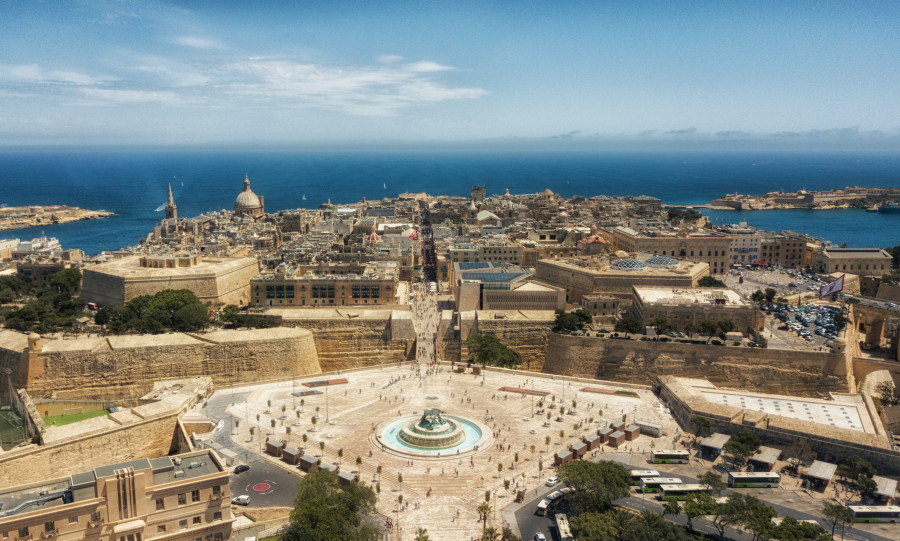
Presented on 26th October 2026, Malta's Budget for 2027 outlines a combination of existing incentives and targeted regulatory changes.
For the property market, the emphasis is on maintaining support for homeownership and renovation while introducing greater transparency in certain development transactions. Meanwhile, changes affecting third-country nationals place renewed importance on long-term residence planning.
At Malta Sotheby's International Realty, we highlight the key measures and their potential implications for anyone buying, owning, investing in or relocating to property in Malta and Gozo.
Property Incentives Continue into 2027
The Government has confirmed its intention to renew existing property and housing support schemes, including incentives for home purchases, renovations and renewable energy investments.
Among the existing measures are the first-time buyer stamp duty exemption on the first €200,000, the 10% Deposit Scheme for qualifying properties up to €250,000, and the Equity Sharing Scheme, now accessible to eligible applicants aged 25 and over. In specified cases of separation, the Equity Sharing Scheme's property-value limit can reach €350,000 for applicants aged 40 or over purchasing their former partner's share of the former matrimonial home.
Existing inheritance-duty relief also provides for a reduced rate of 3.5% on the first €400,000 of certain inherited residential properties, subject to eligibility.
Incentives for qualifying Urban Conservation Area (UCA) and vacant properties have also included tax exemptions on the first €750,000 of a transaction, encouraging the restoration and preservation of Malta's architectural heritage.
While these measures are not new Budget 2027 announcements, their continued availability remains relevant to prospective buyers. Specific renewal conditions, particularly for restoration-related incentives, should be confirmed against the forthcoming regulations.
Greater Transparency for Airspace Sales and Property Development
One of the more significant new property-related proposals concerns the taxation of airspace transactions.
The Government has identified certain arrangements in which the taxable value recorded in a transaction may not reflect the full economic value of the completed development.
To address this, Budget 2027 proposes additional safeguards, including more comprehensive disclosure of the total agreed consideration, strengthened valuation and verification procedures, and measures covering arrangements involving intermediaries or developers who do not appear directly on the deed.
The intention is to ensure that taxation reflects the economic substance of the transaction.
For developers, investors and purchasers of properties involving airspace rights, the proposed changes reinforce the importance of transparent contractual arrangements and thorough due diligence.
The new framework is expected to apply to future transactions following consultation with relevant stakeholders. Specific implementation dates and detailed rules have not yet been announced.
Construction Sector: A New VAT Mechanism
Budget 2027 also proposes introducing a reverse-charge VAT mechanism for certain construction-sector transactions.
Under the proposed system, responsibility for accounting for VAT would shift from the contractor or supplier to the business purchasing the construction services.
Where the mechanism applies, the purchasing business would calculate and declare the applicable VAT and could deduct it only where permitted under existing VAT legislation.
Importantly, residential property developers whose sales are exempt from VAT without credit would still be unable to recover the VAT they self-account for. For these developers, VAT would therefore remain a cost of construction, even though responsibility for declaring it shifts from the contractor to the purchasing business.
The objective is to strengthen tax compliance and address practices involving unpaid VAT, including VAT charged but not remitted to the authorities.
For property developers and businesses commissioning construction projects, the proposed changes could affect invoicing, accounting procedures, cash flow and overall project cost planning.
This is not an announced general increase in the VAT rate. The transactions covered and implementation timetable remain subject to further clarification.
Short-Let Properties: Higher Eco-Contribution from January 2027
Owners and investors involved in Malta's short-term rental market should take note of an increase in the tourism eco-contribution.
From 1st January 2027, guests over the age of 18 staying in short-let apartments will be subject to an environmental contribution of €10 per person, per night, capped at €80 per person.
For comparison, the announced contribution for hotels and other collective accommodation will be €8 per person, per night, capped at €64.
Although the contribution is payable by guests rather than being a direct tax on property ownership, accommodation operators are responsible for collecting and remitting it to the relevant authorities. Operators should therefore ensure that their booking systems, payment processes and guest communications are updated ahead of 1st January 2027 to reflect the new rates.
For owners operating licensed holiday apartments, the change is also an important consideration when reviewing pricing strategies, booking arrangements and expected rental returns for 2027.
Investors assessing short-let opportunities should consider operating expenses, licensing requirements, occupancy patterns and the financial implications of the new contribution when comparing short-term accommodation with traditional long-term letting.
Residency in Malta: Greater Importance Placed on Long-Term Resident Status
Beyond property-specific measures, Budget 2027 introduces changes affecting certain third-country nationals living and working in Malta.
These announcements are particularly relevant to international professionals, relocating families and employers supporting overseas employees.
A central feature of the changes is the distinction between third-country nationals holding recognised Long-Term Resident (LTR) status and those residing in Malta under other, more temporary arrangements.
Changes to Public Transport, Childcare and Benefits
From January 2027, eligibility for several existing benefits will become more restricted.
Free public transport will generally remain available to Maltese citizens, resident EU citizens and recognised long-term residents, subject to applicable exemptions.
Similarly, free childcare for new enrolments will be restricted to the qualifying categories announced in the Budget. Importantly, children already benefiting from the existing free childcare scheme will retain access until they cease to meet the relevant eligibility requirements.
The Budget also restricts eligibility for the payment associated with atypical working hours to the specified qualifying groups.
For affected foreign residents, these developments may influence household budgeting, family planning and the overall cost of living in Malta.
Understanding Long-Term Resident Status
Under Malta's established immigration framework, eligible third-country nationals can generally apply for Long-Term Resident status after at least five years of legal and continuous residence.
However, completing five years in Malta does not automatically confer this status.
Applicants must satisfy additional requirements, including appropriate financial resources, accommodation and integration criteria. Certain residence categories and periods of absence may also affect eligibility.
For individuals planning to build their future in Malta, recognised long-term residence can provide greater stability and a more established framework for long-term settlement.
It is also important to distinguish Long-Term Resident status from other residence permits and investment-based residency programmes. Purchasing property in Malta does not, by itself, automatically grant Long-Term Resident status.
Those considering relocation or permanent settlement should assess the immigration route appropriate to their circumstances with a qualified adviser.
Higher Permit Costs for Third-Country Nationals
Budget 2027 also introduces additional costs relating to employment and residence permits for third-country nationals.
The announced measures include an increase in the fee for new employment-permit applications from €600 to €800, alongside a new €400 annual infrastructure contribution applicable to new applicants and permit renewals.
Minors under the age of 18 will be exempt from the infrastructure contribution.
Further increases to certain fees administered by Identità have also been announced, although additional implementation details remain outstanding.
For businesses employing international talent and families preparing to relocate, these developments make early financial and administrative planning increasingly important.
The changes also highlight the value of exploring appropriate long-term residency pathways for those intending to establish a lasting connection with Malta.
What Does Budget 2027 Mean for Malta's Property Market?
Taken together, the measures announced in Budget 2027 introduce several considerations for the residential and investment property sectors.
For homebuyers, the continuation of established incentives maintains opportunities for assistance, particularly for first-time purchasers and those considering renovation projects.
For developers and investors, the proposed airspace and construction VAT reforms place additional emphasis on transparent transactions, accurate valuations and regulatory compliance.
For short-let property owners, higher environmental contributions add another consideration to rental-pricing strategies and investment returns.
For international residents, changes to permit costs and access to certain benefits reinforce the importance of understanding Malta's different residency categories before making long-term financial and property commitments.
Budget 2027 does not announce a new property-linked residency programme or changes to the general framework governing property purchases by foreign nationals. Property acquisition and immigration eligibility remain separate legal considerations.
Looking Ahead: Making Informed Property Decisions in Malta
Malta continues to offer a diverse residential property landscape, from contemporary waterfront apartments and premium lifestyle developments to historic townhouses, distinctive houses of character and homes in Gozo.
As the measures announced in Budget 2027 progress towards implementation, buyers, investors and existing property owners should monitor the publication of the relevant legislation and updated scheme conditions.
Understanding how property incentives, development regulations, ownership costs and residency requirements interact can make an important difference when planning a purchase or investment.
About Malta Sotheby’s International Realty
At Malta Sotheby's International Realty, our team combines local property expertise with an international perspective to help clients navigate Malta's residential market with confidence. Whether you are considering purchasing a home, acquiring a distinctive property, exploring an investment opportunity or relocating to the Maltese Islands, our property specialists can help you discover opportunities aligned with your long-term goals.
Contact us today on +356 2010 8077/8070, or visit our offices located on the Portomaso Marina and the Tigne Point Pjazza to speak with one of our property specialists or to arrange a personalised consultation.
This article reflects the measures announced in Malta's Budget 2027 on 26 October 2026, together with relevant existing property incentives. Certain announcements remain subject to implementing legislation, legal notices and updated eligibility conditions. The information is intended as general guidance and does not constitute legal, tax or immigration advice.