Can US Citizens Buy Property in Malta?
Malta Relocation & Residency News
18th April 2026

Malta has become an increasingly attractive destination for international property buyers, and United States citizens are no exception. With its Mediterranean lifestyle, English-speaking population, strong legal framework, and strategic position within the European Union, Malta offers a compelling mix of lifestyle and investment opportunity.
For American buyers, the key question is not only whether property ownership is permitted, but also under what conditions, what restrictions apply, and how the process works in practice. While Malta welcomes foreign property buyers, US citizens fall under a separate regulatory category that influences how and where property may be acquired.
Overview of Property Ownership Rights for Foreigners in Malta
United States citizens are considered third-country nationals or foreign nationals under Maltese law. This classification includes any individual who is not a citizen of the European Union or European Economic Area member states.
Malta allows foreign nationals to purchase immovable property, including residential and commercial real estate. However, property ownership by non-Maltese citizens is regulated by the Immovable Property Acquisition Act. This legislation establishes the rules governing who may buy property, what types of property may be acquired, and whether prior government approval is required.
As a result, US citizens are subject to specific conditions that do not apply to EU nationals. These conditions do not prohibit ownership, but they do impose additional requirements that must be followed carefully.
Is It Legal for US Citizens to Buy Property in Malta
Yes, US citizens can legally buy property in Malta. Ownership is permitted for residential, investment, and commercial purposes, provided the acquisition complies with Maltese law. The legality of the purchase is not in question, but the structure of the purchase matters significantly. Whether a US citizen needs government approval, how many properties can be purchased, and where those properties may be located depend on several factors.
The most important distinction is whether the property is located within a Special Designated Area or outside one. This distinction determines whether an Acquisition of Immovable Property (API) permit is required and whether restrictions apply to the number of properties that may be owned.
Special Designated Areas and Their Importance
Special Designated Areas, commonly referred to as SDAs or Lifestyle Developments, are specific developments approved by the Maltese government where foreign nationals can purchase property without the need for an Acquisition of Immovable Property (API) permit. These areas are designed to attract international buyers and are exempt from many of the restrictions that apply elsewhere.
In SDAs, US citizens can purchase one or more properties without limitation. There are no restrictions on the size or value of the property, and ownership may be structured for personal use, rental income, or investment. Properties in these areas may also be rented out freely, including on the long let and short let markets, subject to licensing requirements.
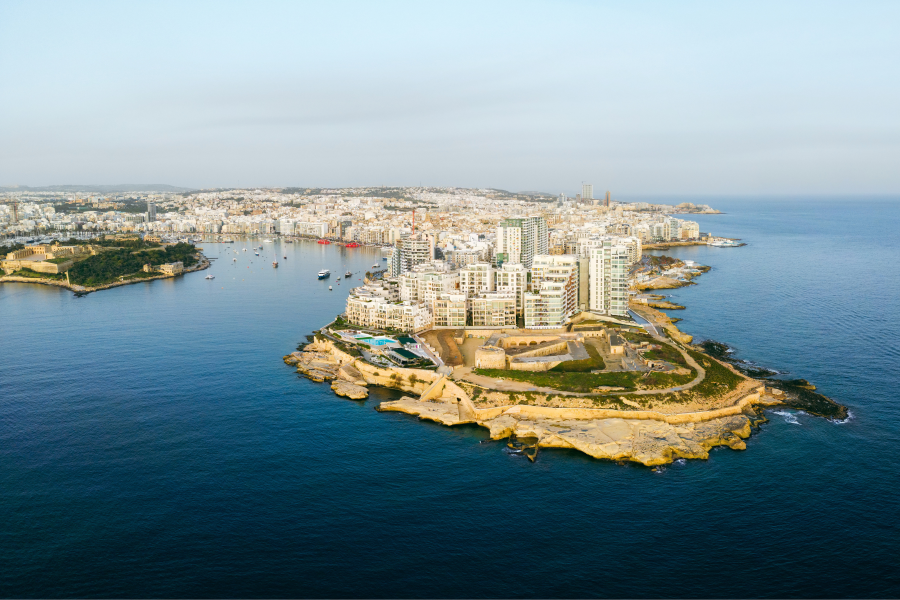
Examples of well-known Special Designated Areas include Portomaso, Tigne Point, Fort Cambridge, Pendergardens, and Mercury Towers, among others. These developments typically offer modern amenities, managed environments, and strong rental demand, which explains their popularity with international buyers.
Buying Property Outside Special Designated Areas in Malta as a US Citizen
When a US citizen wishes to buy property outside a Special Designated Area, the process becomes more regulated. In such cases, an Acquisition of Immovable Property permit is required before the final deed of sale can be completed. This permit is issued by the Maltese government and is property-specific.
The application process when applying for an API permit involves submitting personal details, property information, and supporting documentation. The processing time for an API permit in Malta can vary, but buyers should expect the process to take several weeks, and in some cases even longer, before approval is granted.
Minimum Property Value Requirements for US Citizens in Malta
Maltese law sets minimum purchase price thresholds for non-EU buyers who purchase properties located outside of Special Designated Areas. The minimum value depends on whether the property is a house or an apartment and these figures are subject to change by government notice, so it is essential to confirm the applicable thresholds at the time of purchase. However, properties located within Special Designated Areas are not subject to minimum value requirements, which offers greater flexibility for US buyers considering different price points.
Number of Properties a US Citizen Can Buy in Malta
Outside Special Designated Areas, a US citizen is typically limited to purchasing one property. This restriction applies regardless of whether the property is purchased in an individual's name or through certain types of legal structures. The intention is that the property serves as a primary or secondary residence rather than a portfolio investment.
Within Special Designated Areas, there is no limit on the number of properties that may be acquired. This makes SDAs particularly attractive to US citizens interested in building a property investment portfolio in Malta.
Can US Citizens Buy Property for Investment Purposes in Malta
Investment purchases that involve renting out the property are generally only permitted within Special Designated Areas. Outside SDAs, properties acquired under an API permit are usually restricted to owner occupation.
Within SDAs, US citizens may freely rent out their properties, subject to compliance with local regulations. This includes registration with the tax authorities, obtaining any necessary rental licenses, and declaring rental income in Malta.
Short let rentals, including holiday lets, are regulated and require additional licensing through the Malta Tourism Authority. Long-term rentals are governed by residential lease regulations, which set out minimum lease periods and tenant protections.
The Property Purchase Process in Malta for US Citizens
The process of buying property in Malta is well established and transparent, with a strong emphasis on notarial oversight. Once a suitable property is identified and a price agreed, the buyer and seller enter into a Promise of Sale Agreement, known in Malta as a Konvenju.
This agreement sets out the terms and conditions of the sale, including the purchase price, completion date, and any conditions, such as the issuance of an Acquisition of Immovable Property permit. A deposit is typically paid at this stage, often equivalent to 10% of the purchase price.
The notary conducts legal due diligence, including title searches, verification of planning permits, and confirmation that the property is free from encumbrances. Once all conditions are satisfied, the parties proceed to the final deed of sale, at which point ownership transfers and the balance of the purchase price is paid. This process can take anywhere from 3 – 12 months.
Property Financing Options for US Citizens in Malta
US citizens can obtain financing for property purchases in Malta, although options may be more limited than for residents or EU nationals. Maltese banks do offer home loans to non-residents, including US citizens, but the lending criteria is generally stricter.
Loan-to-value ratios are typically lower, often around 60% to 70% of the property value. Banks will assess the potential buyer’s income, creditworthiness, and existing liabilities, and may require additional documentation, including tax returns and bank statements from the United States.
Some US buyers choose to finance their purchase through US-based lenders or by leveraging existing assets. Currency exchange considerations are important, as mortgages in Malta are denominated in euros.
Property Taxation Considerations for US Citizens Buying Property in Malta
Taxation is a critical aspect of any cross-border property purchase. In Malta, buyers are subject to stamp duty on the acquisition of property. The standard rate is 5% of the purchase price, although reduced rates may apply in specific circumstances, such as first-time buyers of their primary residence.
There is no annual property tax in Malta. This is often viewed as a significant advantage compared to other jurisdictions. However, owners may be liable for municipal charges or condominium fees, or ground rent, depending on the property.
Rental income earned in Malta is taxable in Malta. Owners may opt for a final withholding tax system, which allows rental income to be taxed at a flat rate of 15%, without the need to declare expenses. Alternatively, income may be declared under the progressive tax system.
For US citizens, worldwide income is subject to US taxation, meaning any rental income and capital gains made in Malta may also need to be reported to the United States Internal Revenue Service (IRS). Malta and the United States have a double taxation treaty designed to reduce the risk of the same income being taxed twice. However, the treaty’s savings clause still permits the United States to tax its citizens on worldwide income, making professional tax advice essential to ensure compliance in both jurisdictions.
Capital Gains on Sale of Property in Malta for US Citizens
When a property in Malta is sold, capital gains tax may apply. In most cases, sellers may opt to pay a final withholding tax calculated as a percentage of the sale price, rather than the actual gain. The applicable rate depends on factors such as how long the property has been owned and whether it was used as a primary residence.
Properties sold after being owned for a certain number of years may benefit from reduced rates. Exemptions may also apply in limited circumstances, such as the sale of a primary residence after a minimum period of occupation.
Residence and Citizenship Considerations for US Citizens in Malta
Buying property in Malta does not automatically grant residency or citizenship. However, property ownership can support certain residence applications. Malta offers several residency programs that are open to non-EU nationals, including the Malta Permanent Residence Programme (MPRP) and the Global Residence Programme (GRP).
These programs have specific eligibility criteria, including minimum property values or rental thresholds, minimum income requirements, and application fees. For US citizens considering relocation, understanding how property ownership fits into a broader residency strategy is essential.
Legal and Practical Considerations for US Citizens in Malta
Engaging experienced professionals is critical when buying property in Malta as a US citizen. A qualified notary plays a central role when purchasing property in Malta, acting as an impartial legal advisor to both parties. Independent legal advice may also be sought, particularly in more complex transactions.
Buyers should also consider practical matters such as property management, especially if the property will be rented out or used as a second home. Many Special Designated Areas offer on-site management services, which can simplify ownership for overseas buyers.
Insurance, utilities, and ongoing maintenance costs should be factored into the overall budget. While Malta is generally considered a low-maintenance jurisdiction compared to others, due diligence remains essential.
Why Malta Appeals to US Property Buyers
Malta’s appeal to US property buyers is rooted in legal certainty, market stability, and accessibility. English is an official language used across contracts, court proceedings, and government documentation, minimising the procedural complexity for US buyers. The legal system combines civil law with common law principles, offering familiarity for US investors while maintaining clear property title protections.
From a market perspective, Malta’s property sector is structurally constrained by limited land availability and strict development controls, factors that have historically supported price resilience. Demand is sustained by international residents, foreign workers, and investment migration programs, while the absence of an annual property tax further enhances long-term investment.
For US citizens seeking exposure to a stable European property market, whether for personal use or investment, Malta presents a clearly defined and regulated environment.
Whether the goal is investment, relocation, or lifestyle enhancement, Malta offers a transparent and well-regulated property market that remains open to American buyers. For US citizens considering property ownership in Malta, expert guidance is essential to navigating regulatory requirements, location restrictions, and long-term value considerations.
Malta Sotheby’s International Realty offers deep local market knowledge, international reach, and a proven understanding of complex cross-border transactions. To explore property opportunities in Malta with clarity and confidence, contact Malta Sotheby’s International Realty for personalised advice and access to the country’s most sought-after real estate on +356 2010 8077, visit www.maltasothebysrealty.com, or stop by our offices at the Portomaso Marina or the Tigné Point Pjazza.